
Direct answer: The best French Bulldog vacation plan keeps travel cool, structured, and low-stress. Most Frenchies do best with climate-controlled car travel, short activity windows, reliable bathroom breaks, a familiar sleep setup, and strong heat-risk management. If your dog has breathing issues, high anxiety, illness, or poor heat tolerance, the safest choice may be staying home with trusted care.
Who this is for
- Frenchie owners planning road trips, hotel stays, beach trips, cabin weekends, or multi-day travel
- Owners trying to decide whether their dog should travel at all
- Families who want a practical French Bulldog packing and safety framework
- People comparing car travel, lodging choices, and vacation activities with breed-specific realism
Who should skip this
- Owners dealing with active breathing trouble, collapse, heat stress, or current illness; talk to your veterinarian first
- Readers looking for guarantee-style airline promises or rigid travel rules that can change anytime
- Anyone trying to justify an unsafe trip instead of making a safer plan
Top priorities at a glance
| Priority | What to do | Why it matters |
|---|---|---|
| Heat control | Keep travel climate-controlled and avoid hot-hour activity | French Bulldogs can overheat fast |
| Breathing safety | Do not treat a noisy, easily winded dog like a normal travel athlete | Travel stress can amplify airway problems |
| Predictable routine | Keep meals, walks, water access, and sleep timing steady | Routine reduces stress and digestive issues |
| Packing for the dog, not the fantasy | Bring cooling, feeding, cleanup, and rest essentials | Missing basics creates preventable problems |
| Choose dog-friendly activities carefully | Short, cool, low-risk outings beat packed itineraries | Frenchies do better with moderation than overload |
Methodology: how we evaluated safe travel for Frenchies
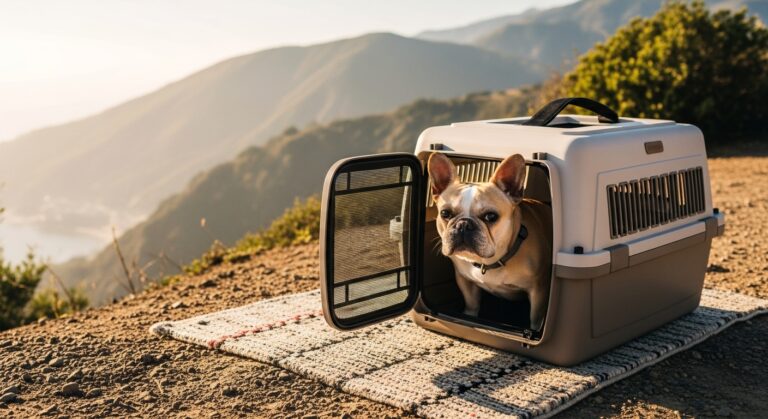
This guide is built around practical risk management for brachycephalic companion dogs. We prioritized the real variables that most often derail travel for French Bulldogs: overheating, breathing strain, stress, digestive disruption, sleep disruption, and poor trip fit. Rather than glorifying “bring your dog everywhere” travel, this page weighs whether a vacation is actually compatible with the dog’s body, health history, and temperament.
Should your French Bulldog travel at all?
Not every Frenchie should go on vacation. A dog with significant breathing compromise, extreme car anxiety, recent illness, heat intolerance, ongoing vomiting or diarrhea, or poor recovery after ordinary outings may be better off at home with trusted care. This is not failure. It is good management.
If you are not sure how medically resilient your dog is, start with French Bulldog health problems and the French Bulldog overheating playbook before booking anything ambitious.
Car travel is usually the safest default

For most French Bulldogs, climate-controlled car travel is safer and easier to control than other forms of travel. You can stop when needed, monitor breathing, adjust temperature, offer water, and avoid forcing your dog through crowded, noisy environments. A short road trip with a calm schedule is usually a better first travel test than an all-day adventure.
Use a secured crate or crash-tested restraint setup when possible, plan bathroom and cooling stops, and never leave your dog in a parked vehicle—not even briefly in warm conditions.
Flights require extra caution
Flights are the category where owners most often underestimate risk. Airline rules change, carrier requirements vary, and brachycephalic dogs may face more stress and safety concerns than longer-muzzled breeds. If a flight is unavoidable, verify current airline rules directly, speak with your veterinarian if your dog has breathing concerns, and assume that a simple internet checklist is not enough. Avoid false confidence here.
The practical rule is simple: if the dog is already borderline for breathing, heat, or stress, flying is often a poor fit.
How to choose lodging that actually works

The best vacation lodging for a French Bulldog is cool, quiet, easy to access, and predictable. Stairs, hot balconies, long elevator waits, tiny shaded outdoor areas, and crowded lobbies can all make travel harder than owners expect. Look for lodging with easy potty access, reliable air conditioning, non-chaotic sleeping arrangements, and enough floor space for your dog to rest calmly.
If you are building a checklist for safer indoor setups, review creating a safe environment for a French Bulldog.
What to pack for a French Bulldog vacation
- Food for the entire trip plus extra in case of delays
- Bowls, bottled water or a trusted refill plan, and travel-friendly hydration gear
- Harness, leash, waste bags, and ID tags with current contact info
- Medication, supplements, vet records, and emergency contacts
- Cooling aids, towels, wipes, and a familiar bed or blanket
- Crate or carrier if your dog already uses one comfortably
- A simple cleanup kit for digestive accidents or wet beach/pool days
Beach, pool, and water safety
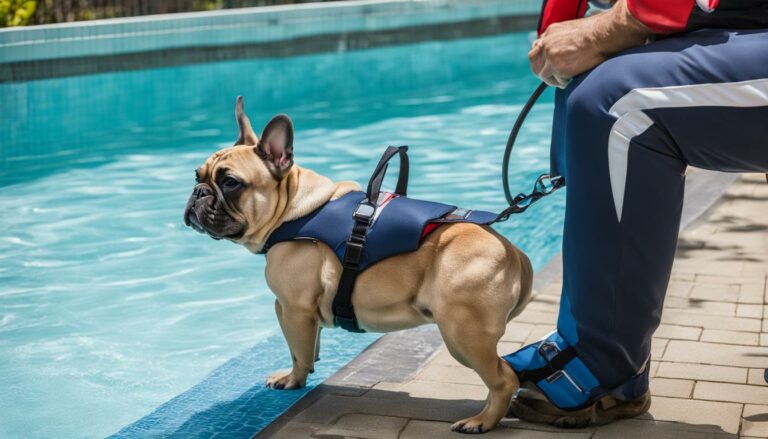
Many vacation plans involve water, but French Bulldogs are not reliable swimmers. Water activity should be treated as a controlled safety scenario, not a cute free-play moment. If you are near pools, lakes, docks, or beaches, review can French Bulldogs swim and should they? before assuming your dog will figure it out. Short, supervised water exposure and strong heat awareness matter far more than “fun vacation energy.”
Food, bathroom breaks, and stress management on the road
Most travel-related Frenchie problems are not dramatic. They are cumulative: missed bathroom breaks, overheated rest stops, skipped meals, nervous panting, loose stool, and poor sleep. Keep meals modest and predictable, use frequent calm breaks, and do not suddenly turn the trip into a buffet of treats and restaurant scraps. If body condition is already a concern, use French Bulldog weight guidance to avoid compounding travel strain with excess weight.
Comparison table: vacation style by risk level

| Travel style | Best for | Main benefit | Main risk |
|---|---|---|---|
| Short climate-controlled road trip | Most healthy Frenchies | Highest control and easiest monitoring | Owner complacency about heat during stops |
| Dog-friendly cabin or house stay | Dogs who need quieter environments | More routine control and easier decompression | Outdoor heat or poor fencing setup |
| Busy hotel/city trip | Experienced, adaptable dogs | Convenient for owners | Noise, elevators, hot sidewalks, overstimulation |
| Flight-heavy trip | Only carefully selected cases | Access to distant destinations | Highest stress and lowest control |
Decision framework: should you bring your Frenchie?
- Choose yes if your dog is medically stable, tolerates travel well, and the trip is cool, structured, and dog-compatible.
- Choose maybe if the dog is generally healthy but inexperienced; start with a short local trip, not a major vacation.
- Choose no if the itinerary is hot, crowded, flight-heavy, physically demanding, or obviously stressful for your dog.
- Choose no for now if your Frenchie is a puppy still learning stability and routine; see French Bulldog puppy care.
Common mistakes
- Planning for the owner, not the dog. A fun human trip is not automatically a good dog trip.
- Underestimating heat risk. A Frenchie can get into trouble on a “mild” day if stress and sun stack together.
- Packing too little food or water. Familiar routines matter during travel.
- Doing too much in one day. Frenchies often need recovery time more than owners expect.
- Trusting water activities too easily. Swimming and beach days need active safety management.
FAQ
Are French Bulldogs good travel dogs?
Some are, especially for short road trips with careful planning. But they are not universally easy travel dogs because heat, breathing, and stress tolerance can vary a lot.
Can French Bulldogs fly safely?
That depends on the individual dog, the airline’s current rules, and the medical context. Flight plans deserve extra caution for brachycephalic breeds, and owner assumptions should be verified directly.
What is the safest vacation type for a Frenchie?
Usually a short, climate-controlled road trip with predictable lodging and a low-intensity itinerary.
Should I take my Frenchie to the beach?
Only with strong heat, hydration, and water-safety management. Many beach days are much harder on Frenchies than owners expect.
When should I leave my dog home instead?
Leave your dog home if the trip is hot, crowded, flight-heavy, stressful, medically risky, or simply not built around the dog’s limitations.
Sources
- General veterinary guidance on brachycephalic breeds, heat risk, travel stress, and safe companion-dog transport
- French Bulldog Overheating Playbook
- French Bulldog Health Problems Guide
- Creating a Safe Environment for a French Bulldog
- Can French Bulldogs Swim and Should They?
Related next reads
- French Bulldog Overheating Playbook
- French Bulldog Health Problems Guide
- French Bulldog Weight Guide
- Can French Bulldogs Swim and Should They?
- Creating a Safe Environment for a French Bulldog
- French Bulldog Puppy Care
Author and reviewer
Author: FrenchyFab Editorial Team
Reviewed for practical accuracy: Travel guidance emphasizing brachycephalic safety, heat-risk management, and realistic owner decision-making.
Travel safety note: This guide is educational, not a substitute for current airline policy review or veterinary advice for dogs with known breathing or medical issues.

Frenchy Fab editorial profile focused on practical French Bulldog owner guidance, safety-aware care routines, nutrition, puppy care, grooming, training, and transparent product-review methodology. Content is educational and does not replace veterinary diagnosis or treatment.