
A French Bulldog puppy shopping list should not be a pile of cute products. It should help you create a safe first week: food, water, sleep, potty, cleaning, transport, harness fit, heat awareness, grooming basics, and vet preparation. This guide separates essentials from nice-to-haves so you buy what actually helps.
Quick answer
The best French Bulldog puppy shopping list starts with a safe crate or pen, measured puppy food setup, shallow bowls, harness and fixed leash, potty supplies, cleaning products, grooming basics, cooling awareness, chew-safe enrichment, ID tags, carrier or car restraint, and a vet appointment. Skip unsafe chews, neck-pressure walking gear, heavy heat-trapping outfits, and random supplements.
When to call a veterinarian first
Call your veterinarian before experimenting if your French Bulldog has repeated vomiting, diarrhea, blood in stool, appetite loss, poor growth, sudden weight change, severe itching, ear pain, breathing difficulty, blue or pale gums, collapse, heat distress, eye injury, obvious pain, seizures, or extreme lethargy. A short-muzzled dog can deteriorate quickly, so the safest plan is to treat breathing trouble, heat stress, collapse, and severe gastrointestinal signs as urgent.


What this guide helps you do
- Get a direct answer without exaggerated promises.
- Separate everyday owner decisions from veterinary warning signs.
- Use practical tables, routines, and examples that are easy to apply.
- Choose products only when they support safety, fit, hygiene, training, or monitoring.
Key topics covered
French Bulldog puppy shopping listpuppy cratedog playpenpuppy food bowlsslow feederfront clip harnessfixed leashpotty padsenzyme cleanergrooming wipescooling matsafe chewsID tagpuppy first week
The buying principle: safety before cuteness
French Bulldog puppies attract impulse purchases. Tiny hoodies, themed bowls, fluffy beds, and novelty toys are fun, but the first week needs practical safety more than decoration. Your puppy needs to eat consistently, sleep safely, potty predictably, stay cool, avoid choking hazards, and get to the veterinarian without chaos.
The best shopping list is organized by owner problem. Where will the puppy sleep? How will meals be measured? How will accidents be cleaned? How will the puppy travel? How will you walk without throat pressure? How will you manage heat? How will you prevent chewing dangerous objects?
Buy fewer, better items at first. Add extras after you know the puppy’s size, chewing style, skin sensitivity, and routine. This prevents waste and reduces the chance of buying products that look adorable but do not fit the dog.
First-week essentials
Start with confinement: crate, playpen, or a safe gated area. You need a place where the puppy can rest and be protected when you cannot supervise every second. Add washable bedding only if the puppy does not shred or swallow fabric. Keep the area cool and away from direct heat.
Feeding supplies should include complete puppy food, shallow bowls, a scale or consistent measuring tool, and possibly a slow feeder if the puppy gulps. Do not stockpile many treats before you know what the puppy tolerates. A small bag of simple training treats or part of the puppy’s food is enough.
Potty and cleaning supplies matter immediately. Enzyme cleaner, paper towels, washable pads or potty pads if you use them, poop bags, and a schedule will help more than scolding. Accidents are information about timing, not evidence that the puppy is stubborn.
Walking and travel gear
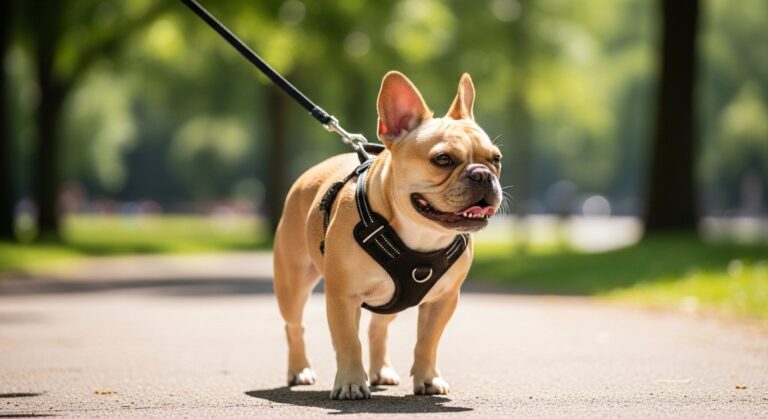
Buy a harness based on chest measurements, not breed label alone. A Frenchie puppy’s body can change quickly, so check fit every week. Use a fixed leash rather than a retractable leash while building manners and safety. Add an ID tag even if the puppy is microchipped.
For car travel, use a crash-tested carrier or restraint when possible. A loose puppy in a car is unsafe for everyone. If the puppy gets carsick, anxious, or overheated, talk to your veterinarian instead of forcing long trips.
Outdoor gear should be heat-aware. Cooling mats, portable water bowls, and shade can help, but they do not make hot weather safe. French Bulldog puppies should not be pushed through warm, humid, or high-excitement walks.
Grooming and health setup
Basic grooming supplies include gentle wipes or cloths, nail tools, a soft brush, puppy-safe shampoo if needed, toothbrush and dog toothpaste, and ear/skin-fold guidance from your veterinarian. Do not put products into sore ears or red folds without diagnosis.
Create a puppy health folder. Include vaccine records, microchip information, breeder or rescue documents, food label, feeding amount, stool notes, and vet appointment details. Take photos of any skin, eye, stool, or breathing concerns to show your veterinarian.
A thermometer and first-aid kit can be useful, but they do not replace a veterinarian. Keep emergency contact information visible. French Bulldogs deserve fast action when breathing, heat, or collapse signs appear.
What not to buy yet
Skip hard bones, antlers, cooked bones, tiny toys that can be swallowed, heavy costumes, choke chains, prong collars, long retractable leashes, random supplements, and multiple new foods. Avoid buying a giant wardrobe before you know whether clothing irritates skin or traps heat.
Do not buy products that promise to solve training without training. Calming sprays, anti-bark gadgets, and punishment tools can create more stress. A predictable routine, positive reinforcement, and realistic puppy expectations work better.
Also avoid overbuying food. If the puppy needs a transition or veterinary diet, large stockpiles can become waste. Buy enough to stay consistent, not enough to lock yourself into the wrong plan.
Room-by-room puppy setup
In the sleeping area, place the crate or pen, safe bedding if appropriate, water access according to your veterinarian’s guidance, and a clear path for nighttime potty breaks. Keep cords, socks, shoes, small toys, and trash away from the puppy. A safe room reduces the number of times you have to say no.
In the feeding area, keep food, bowls, scale, treats, and the feeding log together. This prevents different family members from guessing portions. If several people will train the puppy, divide the day’s reward allowance into a small container so everyone uses the same budget.
In the entryway, keep harness, fixed leash, poop bags, wipes, and ID information. This makes potty trips fast and predictable. Puppies lose focus quickly, and searching for supplies while the puppy is circling the rug is not a great system.
In the cleaning area, store enzyme cleaner, towels, laundry supplies, and waste bags. Accidents are easier to handle when supplies are ready. Avoid harsh scented products around sensitive dogs, and keep all cleaners safely out of reach.
- Bedroom: crate or pen, safe bedding, cool airflow.
- Kitchen: measured food, bowls, scale, log.
- Door: harness, leash, poop bags, wipes.
- Cleaning shelf: enzyme cleaner and towels.
- Vet folder: records, microchip, insurance, emergency numbers.
Budget priorities
If budget is limited, spend first on safety and fit. A well-fitted harness, safe crate, measured food setup, cleaning supplies, and veterinary appointment matter more than themed accessories. Cheap products become expensive when they break, rub, trap heat, or create training setbacks.
Buy size-sensitive gear conservatively. Puppies grow fast. Adjustable harnesses, divider crates, and washable supplies can stretch the budget. Avoid buying multiple beds, costumes, and collars before you know the puppy’s chewing habits and adult size.
Plan for the first vet visit before buying extras. Vaccines, parasite prevention, stool testing, microchip checks, insurance decisions, and any breathing or skin concerns should shape the next purchases. A shopping list should support care, not distract from it.
What to prepare before pickup day
Before pickup day, decide where the puppy will sleep, where meals will happen, where potty breaks will happen, and where supplies will be stored. The puppy should not arrive to a house that is still deciding everything. A simple layout reduces accidents, chewing, and first-night stress.
Wash bowls, set up the crate or pen, place cleaning supplies where they can be reached quickly, and put unsafe household items out of reach. Check the yard or balcony for gaps, toxic plants, pesticides, small objects, and hot surfaces. French Bulldog puppies are curious and low to the ground; they find things adults overlook.
Also prepare the human side. Assign roles for feeding, potty trips, nighttime wakeups, and vet paperwork. Make sure everyone knows the puppy is not being fed random scraps. The first week goes better when the whole household follows the same rules.
- Set up sleep, food, potty, and cleaning zones.
- Puppy-proof cords, shoes, trash, and small objects.
- Confirm vet appointment and records.
- Assign household responsibilities.
- Keep the first week calm rather than socially overwhelming.
Common reader situations and the safest next step
I only want to buy the absolute essentials
Start with safe confinement, food and water bowls, the current puppy food, measuring tool, harness, fixed leash, ID tag, poop bags, enzyme cleaner, a few safe toys, and vet appointment preparation. Those items support sleep, feeding, potty, walking, cleaning, and identification.
Skip clothing, decorative beds, novelty toys, supplements, and multiple treat flavors until you know the puppy better.
My puppy is arriving tomorrow
Do not panic-buy everything. Set up the crate or pen, remove hazards, buy the current food, prepare cleaning supplies, and create a first-night potty plan. Confirm pickup records and schedule the veterinary visit.
The first 24 hours should be calm. Too many visitors, products, treats, and outings can overwhelm the puppy and make stool, sleep, and behavior harder to read.
I live in an apartment
Apartment puppies need potty logistics. Decide whether you will use outdoor potty trips, a temporary indoor grass patch, pads, or a combination. Keep cleaning supplies ready and use a harness for every exit.
Teach elevator, hallway, neighbor, and city noises gradually. Socialization is exposure with safety, not forcing the puppy into chaos.
I already bought too much
Sort items into essentials, supervised-only, later, and return/donate. Keep anything that supports safety, hygiene, feeding, vet care, and training. Remove items that are too small, too hard, too fluffy for a chewer, too hot, or poorly fitted.
A simpler setup often helps puppies settle faster. Too many choices can create more chewing, more mess, and more owner confusion.
The first 72 hours after shopping is done
After the supplies are ready, the first 72 hours should focus on consistency. Feed the same food, use the same potty route, keep the crate or pen location predictable, and avoid overwhelming the puppy with visitors. The shopping list gives you tools; the routine teaches the puppy what life in the home feels like.
Take notes instead of making fast judgments. A puppy that cries the first night is not necessarily crate-resistant forever. A puppy that has an accident is not stubborn. A puppy that refuses one meal may be tired or stressed. Patterns matter more than single moments, but severe symptoms still require veterinary help.
Use the supplies to reduce stress. Enzyme cleaner handles accidents without drama. A harness makes potty exits safe. A crate supports naps. A food scale controls meals. When each item has a purpose, the home feels calmer for both owner and puppy.
- Keep the first three days quiet and consistent.
- Use the current food unless a vet says otherwise.
- Log meals, stool, sleep, and potty timing.
- Limit visitors and high-stress outings.
- Contact your vet for repeated vomiting, diarrhea, weakness, or appetite loss.
Fast decision table
| Category | Buy first | Skip or wait |
|---|---|---|
| Sleep | Crate or pen, washable safe bedding | Oversized plush bed for a shredder. |
| Feeding | Puppy food, shallow bowls, scale | Five toppers and random supplements. |
| Walking | Measured harness, fixed leash, ID tag | Neck-pressure control tools. |
| Cleaning | Enzyme cleaner, towels, poop bags | Harsh scented cleaners around sensitive dogs. |
| Health | Vet records folder, first-aid basics | Home treatment products for undiagnosed problems. |
Best products to consider
These Amazon product boxes are included only where they support the article’s advice. They use the affiliate tracking ID papalex-20. Always confirm the exact item, size, material, ingredients, seller, and suitability for your dog before buying.
French Bulldog puppy starter crate
A correctly sized crate or divider crate supports safe rest and house-training.
- Measure before ordering.
- Keep it cool and calm.
- Pair with positive crate practice.
Affiliate disclosure: this link uses Amazon Associates tracking ID papalex-20. The embedded Amazon unit below is designed to render current Amazon product images and listings for this exact shopping intent when scripts are allowed in your browser.
French Bulldog puppy harness and leash starter set
A harness and fixed leash are essential for safer walks and early training.
- Measure chest girth weekly.
- Avoid throat pressure.
- Replace as the puppy grows.
Affiliate disclosure: this link uses Amazon Associates tracking ID papalex-20. The embedded Amazon unit below is designed to render current Amazon product images and listings for this exact shopping intent when scripts are allowed in your browser.
Puppy enzyme cleaner for accidents
An enzyme cleaner helps remove accident odors that can draw puppies back to the same spot.
- Use according to label directions.
- Blot first; do not just perfume the area.
- Keep cleaning products safely stored.
Affiliate disclosure: this link uses Amazon Associates tracking ID papalex-20. The embedded Amazon unit below is designed to render current Amazon product images and listings for this exact shopping intent when scripts are allowed in your browser.
Step-by-step owner plan
- Write down your dog’s age, current weight, ideal-weight goal if known, medical conditions, and current routine.
- Make one change at a time so you can tell what helped or hurt.
- Track symptoms with dates, photos, stool notes, appetite, breathing, skin, ears, and behavior.
- Use veterinary guidance for persistent, severe, or confusing signs rather than repeating internet experiments.
- Update the routine every few weeks based on your dog’s actual response, not on trend language.
Common mistakes to avoid
- Treating breed averages as rules for every individual dog.
- Changing food, gear, supplements, training, and schedule all at once.
- Ignoring heat, breathing, pain, or severe digestive signs because the dog still seems playful.
- Buying products because they look cute rather than because they fit the dog safely.
- Using affiliate recommendations as medical advice.
- Keeping old clickbait claims, fake statistics, or unsupported promises on a page that should build trust.
Frequently asked questions
What do I need before bringing home a French Bulldog puppy?
Prepare food, bowls, crate or pen, bedding if safe, harness, leash, ID tag, potty supplies, enzyme cleaner, chew-safe toys, grooming basics, and a vet appointment.
Do French Bulldog puppies need clothes?
Usually not for normal indoor life. Clothing can trap heat or irritate skin, so buy only when there is a real weather or medical need.
Should I buy a collar or harness first?
Buy both for different jobs: collar for ID, harness for walking and leash control.
What toys are safest for Frenchie puppies?
Choose size-appropriate toys that cannot be swallowed, shredded, or broken into sharp pieces. Supervise new toys.
Do I need a slow feeder?
Only if your puppy gulps and can use the design comfortably. Some flat-faced puppies need shallow, simple designs.
Should I buy supplements for a new puppy?
Do not add supplements unless your veterinarian recommends them. A complete puppy food should already support growth.
Sources and further reading
- AAHA canine life stage guidelines
- AVMA emergency signs
- WSAVA Global Nutrition Guidelines
- Cornell BOAS overview
Editorial note
This FrenchyFab guide is written for practical owner education. It avoids fake statistics, fake product testing, invented case studies, and medical promises. Use it to organize better questions, safer routines, and smarter product choices, not to replace diagnosis or treatment from your veterinarian.
Last updated: May 31, 2026. Affiliate disclosure: As an Amazon Associate, FrenchyFab may earn from qualifying purchases through links that use tracking ID papalex-20.

Frenchy Fab editorial profile focused on practical French Bulldog owner guidance, safety-aware care routines, nutrition, puppy care, grooming, training, and transparent product-review methodology. Content is educational and does not replace veterinary diagnosis or treatment.