
Frenchy Fab rewrite pack
Who this is for / not for
You are considering home-cooked meals, comparing fresh food options, or trying to understand why recipes online may be incomplete.
Emergency diet treatment, puppies without professional formulation, dogs with kidney, liver, heart, GI, urinary, endocrine, allergy, or obesity issues unless your veterinarian is guiding the plan.
Clear definition
Homemade food for French Bulldogs means food prepared at home for regular feeding. To be safe as a main diet, it must be complete and balanced for the dog’s life stage and medical needs. Chicken, rice, vegetables, and love are not automatically complete nutrition.

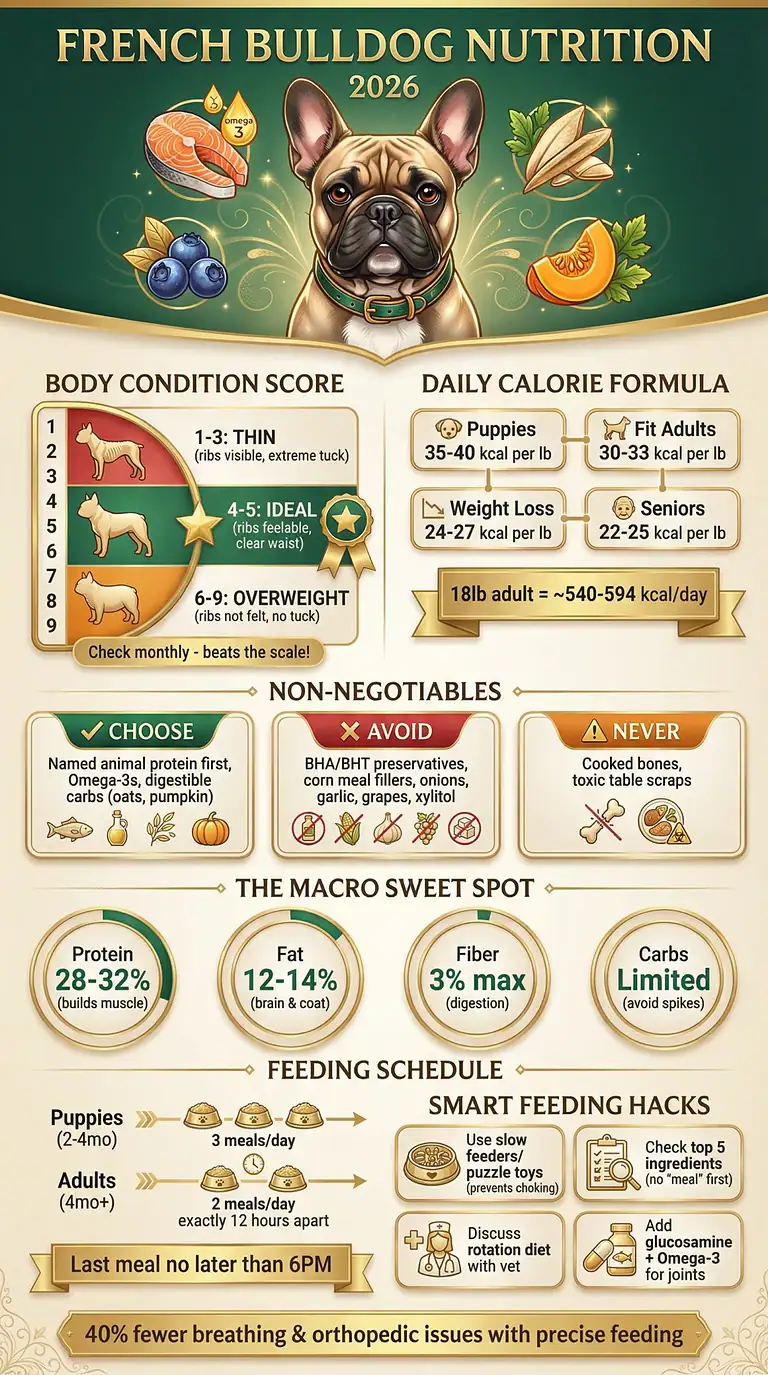

Decision table: homemade food or not?
| Situation | Best path | Why |
|---|---|---|
| Healthy adult, owner wants occasional topper | Keep complete commercial diet as base; use small safe toppers | Lower risk of nutrient imbalance |
| Owner wants 100% home-cooked diet | Use vet or board-certified veterinary nutritionist formulation | Long-term feeding needs correct minerals, vitamins, calories, and ratios |
| Puppy or pregnant dog | Do not improvise; professional formulation required | Growth diets have narrow nutrient requirements |
| Allergies or chronic itch | Veterinary elimination diet plan | Random homemade diets can hide triggers and create deficiencies |
| Obesity or pancreatitis history | Vet-guided calorie and fat plan | Frenchies need careful body condition control |
| Medical disease | Therapeutic nutrition through veterinarian | Diet can affect treatment safety |
Practical framework: the C.A.L.M. homemade diet rule
Complete means the diet meets nutrient needs, not that it contains many whole foods.
Appropriate means matched to age, weight, body condition, activity, health history, and medications.
Log ingredients, grams, stool, itch, weight, appetite, and vomiting/regurgitation.
Schedule rechecks. Long-term homemade feeding should be monitored, not launched and forgotten.
Step-by-step practical instructions
Do not start with a viral recipe
Save the recipe idea, but do not feed it long-term until a professional checks balance, calories, and suitability.
Collect your dog’s data
Record weight, body condition, age, activity, stool quality, treats, medications, allergies, and health diagnoses.
Ask for a formulation
Work with your veterinarian, a board-certified veterinary nutritionist, or a reputable veterinary nutrition tool when appropriate.
Weigh ingredients in grams
Volume measures are too imprecise for long-term feeding. Use a scale and keep a written recipe.
Use the required supplement exactly
Do not skip the vitamin/mineral component. Many homemade diets fail here.
Monitor and recheck
Track weight, stool, coat, itch, energy, vomiting, and appetite. Recheck with your vet and adjust when life stage or health changes.
Examples by situation
Try measured toppers first: a small spoon of plain pumpkin or veterinary-approved topper. Keep the base diet complete.
Do not rotate proteins weekly. Ask about a true elimination diet and log all treats, chews, flavored medications, and table scraps.
Homemade does not automatically mean lower calorie. Use gram weights and body condition targets from your vet.
Do not assume homemade will fix it. Discuss airway, GI, meal size, speed, and medical causes with your veterinarian.
Common mistakes and troubleshooting
- Using recipes without supplements: Meat, rice, and vegetables are usually not nutritionally complete.
- Feeding puppies adult recipes: Growth needs are different and mistakes can be serious.
- Changing everything at once: You cannot interpret stool, itch, or vomiting if every variable changes.
- Ignoring food safety: Handle raw meat, cooked food, storage, and leftovers carefully.
- Publishing “miracle recipe” claims: Link instead to French Bulldog nutrition guide, French Bulldog Health 101 guide, French Bulldog care guide, and homemade food for French Bulldogs guide for conservative, safe nutrition guidance.
Quote-ready answer bank
A homemade diet is only safer when it is complete, balanced, appropriate for the dog, and monitored over time.
The most common homemade diet mistake is skipping the vitamin-mineral balance and relying on whole-food variety alone.
Because Frenchies often struggle with weight, allergies, gas, and regurgitation, homemade plans should be measured and medically supervised.
Collect your dog’s weight, body condition, health history, current food, treats, and symptoms before asking for a diet formulation.
Recommended French Bulldog gear for this guide
papalex-20. Each card uses an exact ASIN-specific Amazon link and a relevant product image for the product shown. Prices, availability, packaging, ratings, and images can change, so verify the final display through Amazon SiteStripe, Product Advertising API, or your Amazon Associates plugin before publishing.These products are practical support tools, not shortcuts. Choose items that fit your Frenchie’s size, breathing comfort, skin sensitivity, chewing style, and veterinary needs.

Best for: Slower meals
Outward Hound Fun Feeder Slo Bowl
A maze-style slow feeder that can help pace meals for fast eaters. Choose a shallow pattern and monitor breathing comfort while your Frenchie eats.
- Good fit: Good for dogs who gulp meals but tolerate puzzle-style bowls calmly.
- Skip if: Skip if the bowl causes frustration, coughing, gagging, or stress around food.

Best for: Food freshness
IRIS USA Airtight Dog Food Storage Container, 2 Pack
Airtight food storage helps keep feeding routines consistent and reduces pantry mess. Keep the original food bag or lot information for recalls and feeding instructions.
- Good fit: Good for measured feeding and clean storage areas.
- Skip if: Skip if you cannot clean and fully dry the container between bags.

Best for: Calm enrichment
LickiMat Classic Buddy Slow Feeder Dog Lick Mat
A lick mat can turn a small amount of dog-safe food into a calm enrichment activity. Use low-calorie toppings and include the calories in the daily food total.
- Good fit: Good for calm routines, nail-trim practice, and decompression after outings.
- Skip if: Skip for dogs that chew or swallow silicone or rubber surfaces.

Best for: Dental routine
Virbac C.E.T. Enzymatic Toothpaste for Dogs and Cats
A dog-and-cat enzymatic toothpaste option for tooth-brushing routines. Never use human toothpaste for dogs.
- Good fit: Good for building a vet-approved dental habit with a soft dog toothbrush.
- Skip if: Skip if your dog has painful gums, loose teeth, bleeding, or mouth odor that needs veterinary diagnosis.

Best for: Wrinkle and paw cleanup
Earth Rated Unscented Dog Wipes, 100 Count
Unscented grooming wipes are useful for quick paw, coat, and skin-fold cleanup between baths. Dry folds afterward so moisture does not stay trapped.
- Good fit: Good for daily maintenance when your vet has not prescribed medicated wipes.
- Skip if: Skip for red, painful, smelly, or infected folds; those need veterinary care.
Helpful video
Use this as visual support, then follow the breed-specific safety notes in this article.
Frequently asked questions
Can French Bulldogs eat homemade food every day?
They can only eat homemade food every day safely when the diet is complete, balanced, appropriate for their life stage and health, and monitored. Do not feed a casual online recipe long-term without veterinary nutrition guidance.
What homemade foods are safe for French Bulldogs?
Safe ingredients depend on the dog and recipe. Plain cooked lean meats, certain carbohydrates, and some vegetables may appear in balanced recipes, but the safety of individual ingredients does not make the whole diet complete.
Do I need supplements for homemade dog food?
Usually yes for long-term homemade feeding. A vitamin/mineral supplement or formulation component is often necessary. Do not guess; use a veterinary nutritionist or trusted veterinary formulation tool.
Is homemade food better than kibble for French Bulldogs?
Not automatically. A complete commercial diet may be safer than an unbalanced homemade diet. Homemade food can be appropriate when formulated and monitored correctly, especially for specific medical or preference needs.
What foods should French Bulldogs avoid?
Avoid toxic foods such as grapes, raisins, onions, garlic, chocolate, xylitol, macadamia nuts, alcohol, and cooked bones. Also avoid high-fat scraps for dogs prone to GI upset or pancreatitis unless your vet approves.
Sources and further reading

Frenchy Fab editorial profile focused on practical French Bulldog owner guidance, safety-aware care routines, nutrition, puppy care, grooming, training, and transparent product-review methodology. Content is educational and does not replace veterinary diagnosis or treatment.