
French Bulldog essentials
Quick buyer checklist for safer Frenchie gear, food, cooling, and feeding support.
French Bulldogs need careful fit, airway-safe gear, heat precautions, and digestion-aware choices. Use these product searches as a starting point, then confirm sizing, ingredients, and vet guidance for your dog.
Disclosure: Some product links may be affiliate links. If you buy through them, we may earn a commission at no extra cost to you. For breathing problems, allergies, overheating, vomiting, or sudden appetite changes, ask your veterinarian first.
Best Dog Foods for French Bulldogs: Comparison Criteria for Puppies, Adults, Sensitive Stomachs, and Weight Control
Compare dog foods for French Bulldogs by life stage, digestion, calories, allergies, skin and ear history, and company transparency.
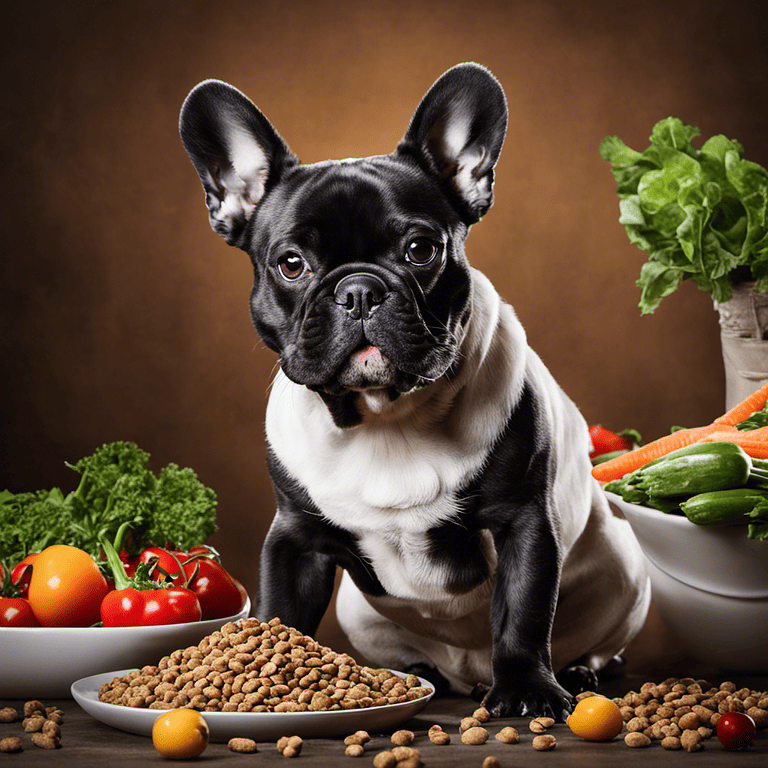
This comparison guide helps you narrow dog-food options for French Bulldogs by life stage, digestion, skin and ear history, weight control, ingredient tolerance and company transparency. It is designed to support better decisions, not declare one universal food best for every Frenchie.
This guide is educational and designed to help you ask better questions. It does not replace diagnosis, treatment, emergency care or a personalized plan from your veterinarian. For severe symptoms, pain, collapse, breathing distress, suspected heatstroke, repeated vomiting, weakness, or sudden behavior change, contact a veterinarian immediately.
French Bulldog food comparison framework
| Criterion | Why it matters for Frenchies | Question to ask |
|---|---|---|
| Life-stage adequacy | Puppies and adults need different nutrient profiles | Is it labeled complete and balanced for my dog’s life stage? |
| Digestibility | Frenchies often have sensitive stomachs and gas | Does my dog maintain formed stool and normal appetite? |
| Calories | Weight affects breathing, joints and heat tolerance | How many calories per cup/can, including treats? |
| Company transparency | Marketing is not the same as quality control | Who formulates the diet and what testing is done? |
| Skin/ear response | Allergies and infections can overlap with diet | Have we ruled out non-food causes with a vet? |
Food categories: pros and cautions
| Category | Potential benefit | Caution |
|---|---|---|
| Kibble | Convenient, measurable, dental-friendly texture for some dogs | Quality varies; measure portions carefully. |
| Wet food | Palatable, higher moisture | Can be calorie dense; dental care still needed. |
| Fresh/cooked commercial | Palatable and less processed perception | Must be complete and balanced; cost and storage matter. |
| Limited ingredient | Useful in vet-guided trials | Not automatically hypoallergenic. |
| Grain-free | May suit some individual dogs | Do not choose from trend alone; discuss with vet if concerned. |

How to write product recommendations safely
When publishing affiliate picks, separate owner needs: best for weight control, best for sensitive stool, best puppy option, best wet-food option, best budget option and best for picky eaters. For each recommendation, list calories, life stage, protein/fat, why it fits Frenchies, who should avoid it, and what evidence supports the choice.
Transition and monitoring plan
Change one variable at a time. Keep treats stable during a food switch and track stool, gas, scratching, ear odor, appetite and weight. A food that looks perfect on paper is not perfect if your dog cannot digest it comfortably.

Buyer mistakes that cost rankings and trust
- Calling a food “best” without explaining criteria.
- Ignoring calories per cup.
- Using fake testing language.
- Making allergy claims without a veterinary context.
- Not disclosing affiliate relationships clearly.
Related feeding guides
Personalized diet planTurn body condition, activity and sensitivities into a practical feeding plan.
Diet planUse sample menus, transition rules and treat budgeting without overfeeding.
Weight managementBuild a safe, realistic plan for an overweight French Bulldog.
Puppy nutritionAge-by-age feeding guidance for growing French Bulldog puppies.
Ear infectionsRecognize ear redness, odor, head shaking and recurring otitis patterns.
Owner action plan: what to do today, this week, and long term
| Timeframe | Action | Why it matters |
|---|---|---|
| Today | Write down the exact food, amount, treats, toppers, chews and stool quality. | Most feeding problems become clearer when all calories and variables are visible. |
| This week | Measure food consistently and stop changing multiple variables at once. | Stable inputs help you identify what actually affects stool, weight, skin and energy. |
| Next vet visit | Discuss body condition, allergies, digestive signs, ear history and whether a therapeutic diet is appropriate. | Nutrition decisions should account for medical history, not just marketing claims. |
| Ongoing | Review body condition every 2–4 weeks and adjust portions gradually. | French Bulldogs can gain weight quietly, and extra weight can worsen comfort and heat tolerance. |
Common myths, clarified
| Myth | Better answer |
|---|---|
| “The most expensive food is automatically best.” | Price is not proof. Evaluate life-stage adequacy, digestibility, company quality control and your dog’s response. |
| “Grain-free is always healthier.” | Grain-free is not automatically better; diet choice should be based on evidence, tolerance and veterinary guidance. |
| “Food allergy explains every itch.” | Many itchy dogs have environmental allergies, infections or parasites; do not diagnose by ingredient guessing alone. |
| “Treats do not count.” | Treats, chews and toppers are often the hidden reason a Frenchie gains weight or has inconsistent stool. |
Copy-and-paste tracking template
Use this note format: Date: ____ / Main concern: ____ / Severity from 1–5: ____ / Trigger: ____ / Food and treats today: ____ / Weather or activity: ____ / Stool, skin, ears, breathing or behavior notes: ____ / What helped: ____ / Questions for vet or trainer: ____.
Tracking is not busywork. It turns vague memories into patterns. Patterns improve daily decision-making, care consistency, and the health of your dog.
At a glance
Best answer: This comparison guide helps you narrow dog-food options for French Bulldogs by life stage, digestion, skin and ear history, weight control, ingredient tolerance and company transparency. It is designed to support better decisions, not declare one universal food best for every Frenchie.
Helpful glossary
best dog foods for French Bulldogs: a practical part of French Bulldog care. dog food comparison: a practical part of French Bulldog care. limited ingredient: a practical part of French Bulldog care. calorie control: a practical part of French Bulldog care. Frenchie food: a practical part of French Bulldog care.
Frequently asked questions
Is grain-free food better for French Bulldogs?
Not automatically. Choose food based on life stage, digestibility, quality control and veterinary guidance, not trend language.
What food helps French Bulldog gas?
Sometimes a slower transition, fewer treats, different digestibility or a vet check helps. Gas can also be related to eating speed or illness.
Should Frenchies eat high-protein food?
Protein level should fit the dog’s life stage and health status. More is not always better.
How do I compare dog foods fairly?
Compare calories, adequacy statement, company quality control, digestibility, your dog’s response and veterinary advice.
Editorial sources and review notes
This guide is written for owners and should be reviewed by your veterinarian for your dog’s individual medical history. Key references used to keep the guidance conservative and source-aware:

Frenchy Fab editorial profile focused on practical French Bulldog owner guidance, safety-aware care routines, nutrition, puppy care, grooming, training, and transparent product-review methodology. Content is educational and does not replace veterinary diagnosis or treatment.