
Leash training a French Bulldog is less about forcing perfect heelwork and more about building calm, repeatable walking habits that fit a compact, strong, easily distracted companion breed. The right plan combines management, short sessions, realistic expectations, and better reinforcement timing. This guide gives you a practical structure for reducing pulling and making walks safer and less frustrating.
Direct answer: The fastest way to leash train a French Bulldog is to combine the right harness, short reward-based sessions, lower-distraction practice, and a consistent rule that pulling does not earn forward movement. Most Frenchies improve when owners stop rushing the walk and start teaching attention, pacing, and calm check-ins deliberately.
Who this is for
- Frenchie owners dealing with pulling, zig-zagging, stop-start frustration, or chaotic walks
- Puppy owners building leash skills from the beginning
- Owners who want a safer, calmer walking routine without harsh corrections
- Families trying to make walks easier for multiple handlers, not just one person
Who should skip this
- Owners expecting a 30-day promise without daily consistency
- Dogs in pain, severe fear, respiratory distress, or extreme reactivity who need veterinary or behavior support first
- Anyone planning to fix pulling through force or punishment instead of training and management
Top priorities at a glance
| Priority | What to do | Why it matters |
|---|---|---|
| Use the right equipment | Fit a harness that protects the airway and stays stable | French Bulldogs should not be corrected by neck pressure |
| Train in short sessions | Keep practice focused and repeatable | Frenchies learn better in short bursts than long grinds |
| Reward attention early | Pay for check-ins and loose leash moments | Good walking starts before pulling happens |
| Control distraction level | Practice in easier environments first | Dogs fail when the environment outruns the training |
| Make forward motion earned | Stop when the leash goes tight, move when it softens | Consistency teaches the actual rule |
Methodology: how we evaluated what works

This guide focuses on practical loose-leash training for a brachycephalic companion breed, not competitive obedience. We prioritized owner consistency, low-stress handling, airway-safe equipment, and methods that fit a French Bulldog’s body and attention span. We also weighted management highly because many bad walks are not training failures—they are environment and pacing failures.
Start with equipment and environment
Leash training gets easier when the equipment is not making things worse. Use a well-fitted harness rather than a collar if your dog pulls. If you have not chosen one yet, start with the French Bulldog harness guide. Then reduce difficulty: quiet street, short route, cooler weather, and fewer triggers.
The core rule: pulling does not earn progress
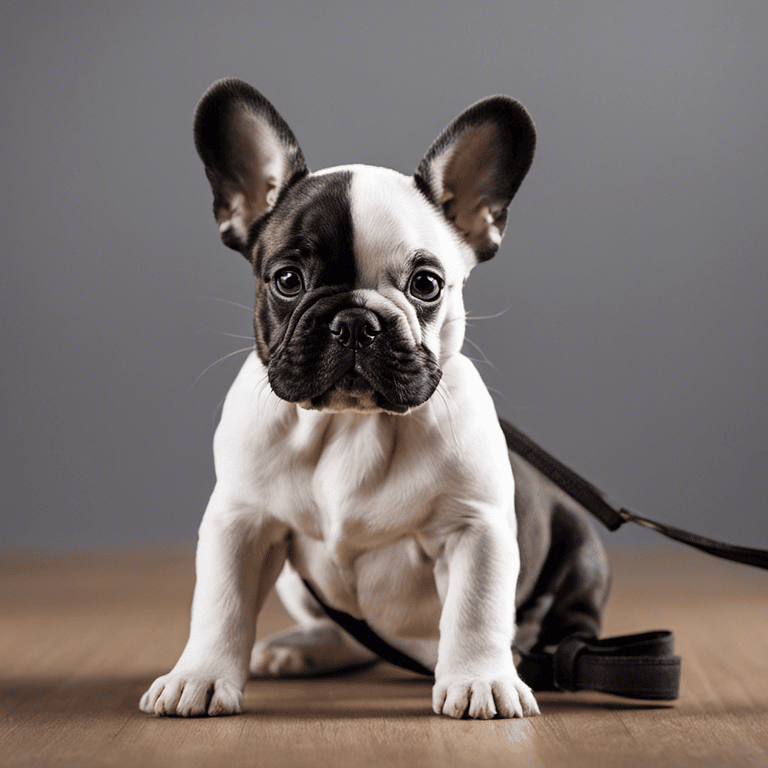
The dog-friendly version of leash training is simple. When the leash goes tight, forward motion stops. When the leash softens, walking resumes. This seems basic, but many owners unintentionally teach the opposite by continuing to move while the dog drags them. Consistency here matters more than fancy technique.
Teach attention before the walk gets hard
Reward the dog for looking back at you, walking near you voluntarily, and matching your pace for a few steps. Do this before the walk becomes a tug-of-war. Tiny check-ins are the building blocks of a better walk. For attention-building drills, see French Bulldog training games.
What to do when your Frenchie pulls
- Stop moving.
- Wait for leash slack or invite a small reset back toward you.
- Mark the soft leash moment.
- Move again calmly.
If your dog surges every few steps, shorten the walk and lower the difficulty. Training should not become a 30-minute battle.
How to structure the first few weeks

Week 1 should focus on harness comfort, attention, and short low-distraction sessions. Week 2 should add simple route repetition and more rewarded check-ins. Week 3 can include slightly harder environments if progress is real. Week 4 is about maintaining consistency and increasing the dog’s ability to recover from distraction. This is a framework, not a promise. Some dogs improve faster, others need more time.
What if your Frenchie is excited, fearful, or anxious?
Pulling is not always a manners problem. Sometimes it is overexcitement, anxiety, or environmental stress. If your dog struggles with noise, visitors, separation distress, or frantic scanning outside, look at the broader pattern. Related support pages include noise fear in French Bulldogs and French Bulldog separation anxiety.
Comparison table: common leash-training approaches

| Approach | Best for | Main strength | Main weakness |
|---|---|---|---|
| Stop-and-go loose leash training | Most Frenchies | Clear rule, humane, effective with consistency | Requires patient repetition |
| Rewarded attention/check-ins | Distractible dogs | Builds engagement proactively | Owners often forget to reward early enough |
| Pattern walking | Overstimulated walkers | Gives structure to chaotic walks | Needs a calmer starting environment |
| Punishment-based leash correction | Usually poor fit for Frenchies | Can suppress behavior briefly | Risky for airway, trust, and long-term learning |
Decision framework
- If your dog pulls because of excitement: shorten walks, reward attention, and slow everything down.
- If your dog pulls because the gear is bad: fix equipment first.
- If your dog pulls mostly in busy environments: train in easier places before graduating upward.
- If your dog seems scared or frantic: address fear, not just leash tension.
- If you keep failing the same walk: the route is too hard for your current skill level.
Common mistakes

- Walking too long too soon.
- Expecting a harness to do the training for you.
- Only reacting after the dog is already pulling hard.
- Practicing in environments that are too difficult.
- Using harsh leash pressure on a brachycephalic breed.
FAQ
Can French Bulldogs be leash trained well?
Yes. Many Frenchies do very well when training is short, consistent, and reward-based.
What is the best harness for leash training?
A well-fitted harness that protects the airway and stays stable. The exact model matters less than the fit.
How long does leash training take?
It depends on the dog, the handler, and the environment. Improvement can happen quickly, but reliability takes repetition.
Should I stop every time my Frenchie pulls?
If your rule is loose leash equals progress, then yes—consistency is what teaches the rule.
What if my dog gets too excited outside?
Use calmer routes, shorter sessions, more check-in rewards, and more structured games away from peak distraction.
Sources
- Reward-based companion-dog leash training principles
- French Bulldog Harness Guide
- French Bulldog Training Games
- Noise Fear in French Bulldogs
Related next reads
- French Bulldog Harness Guide
- French Bulldog Training Games
- Noise Fear in French Bulldogs
- French Bulldog Separation Anxiety
Author and reviewer
Author: FrenchyFab Editorial Team
Reviewed for practical accuracy: French Bulldog walking safety, attention-building, and humane loose-leash training priorities.
Behavior note: This guide is educational and not a substitute for help with severe fear, aggression, or medical contributors to walking problems.
Use the free French Bulldog care plan builder to turn this guide into an age, weight, lifestyle, and health-aware routine.
See how the personalized French Bulldog care plan works or start the free plan now.

Frenchy Fab editorial profile focused on practical French Bulldog owner guidance, safety-aware care routines, nutrition, puppy care, grooming, training, and transparent product-review methodology. Content is educational and does not replace veterinary diagnosis or treatment.