
French Bulldogs were not originally bred for modern influencer culture or for the exact look many buyers now recognize first. Their history runs through small companion bulldogs, urban working-class life, and later selective breeding for companion traits. Understanding that history helps explain both the breed’s charm and the health tradeoffs modern owners should take seriously.
Direct answer: French Bulldogs descend from small bulldog-type companion dogs that became popular with working people and later urban households, especially in France. They were shaped into compact companions rather than endurance or sporting dogs, which helps explain their close-person temperament, low-to-moderate exercise style, and the modern health concerns linked to extreme conformation.
Who this is for
- Readers asking what French Bulldogs were originally bred for
- Owners who want more context for typical Frenchie behavior and limitations
- Buyers trying to understand how breed history connects to modern care
- Anyone looking for a calmer, more factual history than the usual myth-heavy summaries
Who should skip this
- Readers looking for a full academic breed-history monograph
- Owners who need immediate help with breathing, behavior, or heat issues right now rather than background context
- Anyone hoping history will justify ignoring present-day health and welfare concerns
Quick history table

| Period | What was happening | Why it still matters |
|---|---|---|
| Small bulldog roots | Compact bulldog-type dogs were kept as companions by working people | The breed was shaped around close human contact, not athletic endurance |
| Move into France | Small companion bulldogs gained popularity in France and developed a distinct identity | This is where the French Bulldog became more clearly its own breed type |
| Companion refinement | Selection increasingly favored size, expression, and companion appeal | Modern owners inherit both the temperament appeal and the conformation tradeoffs |
How we approach breed history here
This page is written as a practical owner-context guide. The goal is not to romanticize or sensationalize the breed’s past. It is to explain, in plain terms, how French Bulldogs moved from small bulldog roots into a compact companion breed and why that still affects behavior, exercise tolerance, and health today.
What French Bulldogs were bred for

French Bulldogs were ultimately shaped into companion dogs. That matters because many owner expectations still go wrong at this exact point. A Frenchie is usually not the right mental model if you are expecting a high-endurance, heat-tolerant, highly athletic dog built for long-distance activity.
The breed’s success came from being close to people, adaptable to urban life, and manageable in smaller living spaces. That companion role helps explain why Frenchies often bond closely, seek attention, and fit many indoor households well.
How history connects to modern temperament
- People-focused behavior: Frenchies often want to stay close and involved in household life.
- Moderate activity style: they usually do better with shorter, structured exercise than with intense endurance demands.
- Strong routine dependence: many thrive when feeding, rest, training, and alone-time expectations are predictable.
If you are evaluating whether that temperament fits your household, our breed profile and temperament guide are the best next reads.
How history connects to modern health tradeoffs
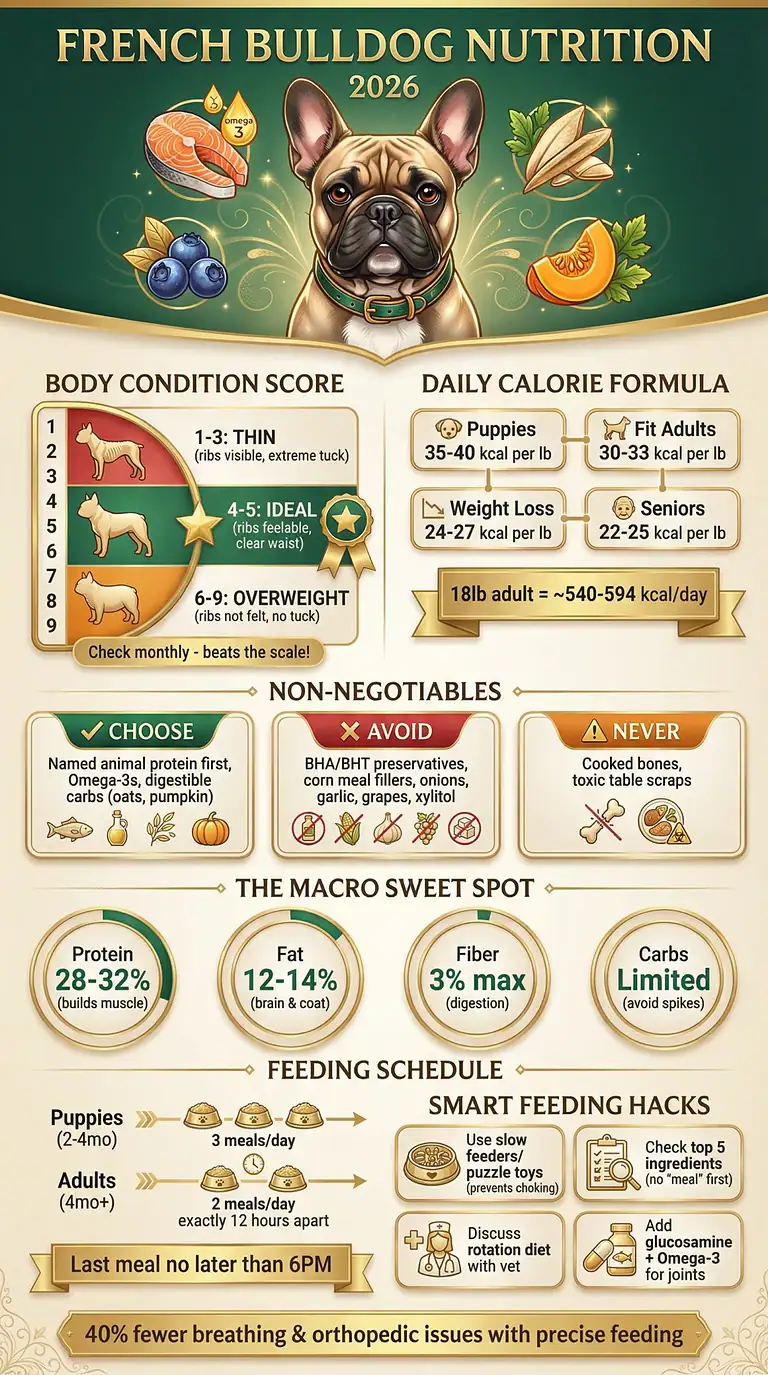
Breed history is not just trivia. It also helps explain why French Bulldogs need breed-specific care. The same compact structure and companion-focused breeding that many people find appealing also sit behind some of the airway, heat, skin, and orthopedic realities owners now have to manage carefully.
- Breathing tolerance can be limited compared with longer-muzzled breeds
- Heat safety matters more than many first-time buyers expect
- Weight control matters because extra body mass amplifies structural strain
That is why a history page should lead back to present-day care, not away from it. Use the breathing guide, overheating guide, and daily care guide if you want the practical layer.
Comparison table: common myths versus better framing
| Myth | Better framing |
|---|---|
| Frenchies were bred to be decorative status symbols from the start | The modern status-symbol framing came much later than the breed’s early companion roots |
| French Bulldogs are built like small tough bulldogs and can handle anything | Modern Frenchies are companion dogs with clear structural limitations |
| History is separate from modern care | History helps explain modern behavior, exercise style, and health management needs |
Decision framework

- Use history as a fit check if you are deciding whether the breed matches your lifestyle.
- Use history as a care clue if your expectations for exercise, independence, or toughness are mismatched.
- Use history as a reminder that companion appeal and health tradeoffs now sit side by side in this breed.
Common mistakes
- Treating breed history like a novelty fact instead of a care clue
- Assuming a compact dog is automatically rugged or heat-tolerant
- Using old myths to excuse modern welfare problems
- Ignoring how conformation affects daily life for the dog in front of you
FAQ

What were French Bulldogs originally bred for?
They were shaped into compact companion dogs, especially suited to close human contact and urban living rather than endurance work.
Does their history explain why they are so attached to people?
Partly, yes. Their long role as close companion dogs helps explain why many Frenchies are social, people-focused, and routine-sensitive.
Does breed history explain current health concerns?
It helps explain part of the picture. Modern selection for appearance and compact structure contributes to the airway and conformation tradeoffs owners now need to manage carefully.
Are French Bulldogs working dogs?
Not in the way most people mean today. Modern Frenchies are primarily companion dogs and should be understood and cared for that way.
Sources
- The Kennel Club breed profile: French Bulldog
- American Kennel Club breed overview: French Bulldog
- Britannica: French bulldog
Related next reads
Author and review process
Written for Frenchy Fab as a practical breed-context guide and edited to remove sensational historical claims, macho language, and unsupported cost or welfare assertions. The goal is useful context that improves owner expectations and care decisions.

Frenchy Fab editorial profile focused on practical French Bulldog owner guidance, safety-aware care routines, nutrition, puppy care, grooming, training, and transparent product-review methodology. Content is educational and does not replace veterinary diagnosis or treatment.