
French Bulldog digestive health matters because this breed often shows food sensitivity, soft stools, gas, vomiting after changes, and gut-related behavior shifts earlier than owners expect. The right plan is not random food hopping. It is careful observation, simpler feeding, and knowing when a home adjustment is enough versus when your veterinarian should step in.
Direct answer: Most French Bulldog digestive issues improve fastest when owners simplify the diet, measure meals, slow food transitions, and watch stool quality, vomiting, appetite, and trigger foods closely. Persistent diarrhea, repeated vomiting, weight loss, dehydration, or severe discomfort need veterinary attention instead of endless trial-and-error feeding changes.
Who this is for
- Frenchie owners dealing with gas, soft stools, vomiting, food sensitivity, or digestive unpredictability
- People trying to choose between diet adjustment, watchful waiting, and a vet visit
- Owners who want a practical gut-health framework instead of generic stomach advice
- Families tracking stool quality, appetite, hydration, and food transitions
Who should skip this
- Dogs with severe vomiting, bloody diarrhea, collapse, major lethargy, or obvious pain; get veterinary care first
- Owners seeking a diagnosis for chronic GI disease without a veterinary workup
- Anyone planning to keep changing foods every few days instead of tracking patterns
Top priorities at a glance
| Priority | What to do | Why it matters |
|---|---|---|
| Simplify the diet | Reduce food variables and keep portions measured | Random changes make patterns harder to read |
| Track stool quality | Use consistency, frequency, and urgency as core signals | Stool tells you how the plan is working |
| Watch vomiting and appetite | Repeated vomiting or poor appetite changes the urgency fast | These signs can signal more than simple sensitivity |
| Protect hydration | Monitor drinking, gum moisture, and energy | Frenchies can decline faster when GI fluid loss stacks up |
| Escalate sooner if severe | Do not sit on repeated diarrhea, weight loss, or dehydration | Home care is not always enough |
Methodology: how we evaluated digestive-health priorities
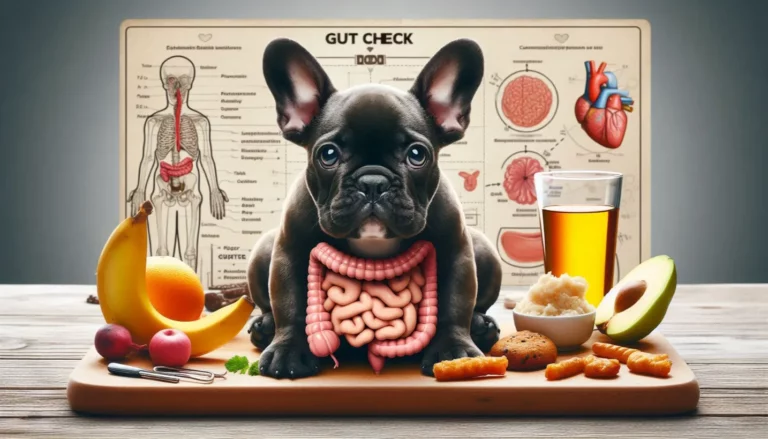
This guide focuses on practical owner decision-making rather than one-size-fits-all feeding theory. We prioritized the issues Frenchie owners encounter most often: soft stool, gas, food sensitivity, transition problems, vomiting, appetite shifts, and hydration risk. We also weighted when to stop home experiments and call the vet, because digestive problems are one of the easiest areas for owners to over-manage without enough structure.
What “normal digestion” looks like in a Frenchie
Normal digestion is not just “no diarrhea.” A well-managed Frenchie usually has formed stools, a stable appetite, predictable bathroom patterns, tolerable gas levels, and no routine vomiting. When those patterns start drifting, the right response is observation plus simpler variables—not panic and not guesswork.
Common digestive problems in French Bulldogs
Gas and bloating discomfort
Frenchies are notorious for gas. Sometimes this is mild and annoying. Sometimes it is a sign that the food does not fit well, the dog is overeating, eating too fast, or reacting to extras and scraps.
Soft stools or diarrhea
These often follow abrupt food changes, rich treats, stress, or true GI upset. Repeated loose stool should be taken more seriously than owners often do, especially if the dog is young or seems lethargic.
Vomiting or regurgitation patterns
Occasional stomach upset is one thing. Repeated vomiting, bile vomit, or food refusal changes the urgency quickly.
Suspected food sensitivity
If symptoms repeat around certain foods, ingredients, or treat patterns, simplify rather than expanding the menu. Related reading: French Bulldog food allergies.
How to reset a messy digestive routine
- Return to a simpler, measured feeding routine.
- Stop layering random extras, toppers, and scraps.
- Track stool consistency, frequency, appetite, and vomiting.
- Slow any food transition instead of making abrupt changes.
- Protect hydration; see hydration for French Bulldogs.
Food transitions: where many owners create the problem

Switching foods too fast is one of the biggest self-inflicted digestive problems. If you need to change food, transition gradually unless your veterinarian says otherwise. For a fuller framework, see the French Bulldog diet transition blueprint.
Comparison table: common digestive patterns and best next step
| Pattern | Common cause | Best next step | Urgency |
|---|---|---|---|
| Mild gas with normal stool | Food fit, fast eating, minor extras | Simplify diet and portions | Low |
| Soft stools after food change | Transition too fast | Slow the change and monitor | Moderate |
| Repeated diarrhea | GI upset, parasites, intolerance, illness | Vet guidance | Higher |
| Repeated vomiting | Diet issue, illness, more serious GI concern | Vet guidance promptly | Higher |
| GI signs plus lethargy or dehydration | More than routine sensitivity | Urgent evaluation | High |
Decision framework

- If symptoms are mild and short-lived: simplify the diet and monitor.
- If symptoms repeat: stop guessing and start tracking.
- If vomiting, diarrhea, or appetite loss persists: call your veterinarian.
- If hydration, energy, or comfort worsens: escalate faster.
Common mistakes
- Changing foods too often.
- Ignoring treat calories and ingredient overload.
- Calling every soft stool “just a Frenchie thing.”
- Missing hydration risk during vomiting or diarrhea.
- Waiting too long when the dog becomes quiet or lethargic.
FAQ

Do French Bulldogs have sensitive stomachs?
Many do. The breed often shows digestive sensitivity more readily than owners expect.
What helps gas in French Bulldogs?
Simpler feeding, measured meals, slower eating, and fewer extras often help more than random supplement stacking.
When should I worry about diarrhea?
Worry sooner if it repeats, is severe, contains blood, or comes with vomiting, lethargy, or dehydration.
Can food transitions cause digestive trouble?
Yes. Fast transitions are a very common trigger.
What matters most besides the food itself?
Portion size, treat load, transition speed, hydration, and whether the dog is actually otherwise healthy.
Sources
- FrenchyFab internal cluster resources on hydration, food transitions, food allergies, feeding, and weight
- French Bulldog Diet Transition Blueprint
- French Bulldog Food Allergies
- French Bulldog Feeding Guide
- Hydration for French Bulldogs
Related next reads
- French Bulldog Diet Transition Blueprint
- French Bulldog Food Allergies
- French Bulldog Feeding Guide
- Hydration for French Bulldogs
Author and reviewer
Author: FrenchyFab Editorial Team
Reviewed for practical accuracy: French Bulldog digestive-pattern tracking, owner triage, and feeding-routine simplification.
Medical note: This guide is educational and not a substitute for veterinary diagnosis when GI symptoms are severe, persistent, or paired with lethargy or dehydration.

Frenchy Fab editorial profile focused on practical French Bulldog owner guidance, safety-aware care routines, nutrition, puppy care, grooming, training, and transparent product-review methodology. Content is educational and does not replace veterinary diagnosis or treatment.