
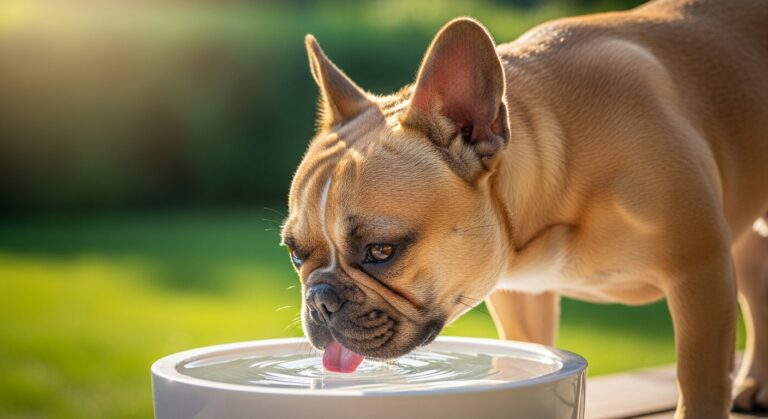
French Bulldogs can dehydrate faster than many owners expect. Their compact build, heat sensitivity, exercise intolerance, and tendency toward digestive upset mean water management is not a minor care detail—it is a daily safety issue. This guide explains how to estimate water needs, spot dehydration early, reduce overheating risk, and know when home care is not enough.
Direct answer: French Bulldogs need steady access to clean water every day, with intake often rising in hot weather, after exercise, during travel, and when eating dry food. If your Frenchie seems lethargic, pants excessively, has tacky gums, vomits, has diarrhea, or cannot keep water down, hydration becomes a medical issue—not just a comfort issue—and your veterinarian should guide next steps.
Who this is for
- French Bulldog owners who want a practical, medically careful hydration routine
- New puppy owners learning normal water intake and bathroom patterns
- Owners managing summer heat, exercise, travel, or air-conditioned indoor living
- Anyone worried about panting, dry gums, diarrhea, vomiting, or reduced drinking
Who should skip this
Skip the article and call your veterinarian or an emergency clinic now if your French Bulldog is weak, collapsing, struggling to breathe, repeatedly vomiting, has bloody diarrhea, seems disoriented, cannot stand normally, has very pale gums, or may already be overheating. Those are urgent symptoms, not watch-and-wait symptoms.
Top priorities at a glance
| Priority | What to do | Why it matters for French Bulldogs |
|---|---|---|
| Keep water available | Offer fresh, clean water at all times unless your vet gives a different plan | Frenchies can overheat and dehydrate quickly, especially in warm or stressful settings |
| Track changes | Notice if your dog suddenly drinks much less or much more than usual | Sudden intake shifts can point to illness, heat stress, pain, or other medical problems |
| Plan for heat | Use water breaks, shade, and short outings in warm weather | Hydration helps support temperature regulation but does not fully prevent overheating |
| Adjust for food and activity | Expect intake to vary with wet food, dry food, walks, play, and season | A “normal” amount is not identical every day |
| Escalate early | Call your vet sooner for puppies, seniors, vomiting, diarrhea, or refusal to drink | Small dogs can get into trouble faster than owners realize |
Methodology: how we evaluated hydration needs
This article uses a conservative, owner-friendly framework built around common small-dog hydration guidance, brachycephalic heat-risk realities, and routine veterinary red flags. Instead of giving a single rigid number for every French Bulldog, we focus on practical variables that change intake: body weight, food moisture, ambient temperature, exercise, travel stress, illness, and age. We also separate normal variation from signs that require professional care, because hydration advice is only useful when paired with good judgment about when home monitoring stops being appropriate.
How much water does a French Bulldog need each day?
A practical starting point is that many dogs need roughly about 50–70 mL of water per kilogram of body weight per day, though some healthy dogs fall outside that range depending on diet, environment, and activity. For many adult French Bulldogs, that often lands somewhere around roughly 1 to 1.5 ounces of water per pound of body weight daily. That is a useful baseline—not a diagnosis tool and not a strict target that must be hit exactly every day.
For example, a Frenchie weighing around 20 to 28 pounds may often drink somewhere in the neighborhood of 20 to 42 ounces in a day. Dogs eating mostly wet food may drink less from the bowl because they are getting more moisture from meals. Dogs eating primarily kibble often need to drink more visibly. Hot weather, excited play, dry indoor air, air travel, car travel, and stress can all shift daily needs upward.
If your dog is dramatically outside their normal pattern, the change matters more than the exact math. A dog who suddenly refuses water, gulps it frantically, or seems unable to stay hydrated deserves closer attention than a dog whose intake simply varies a little with season or food type.
For body-condition context, see our French Bulldog weight guide, because hydration estimates make more sense when you know whether your Frenchie is underweight, ideal, or carrying excess weight.
Why hydration matters so much for French Bulldogs
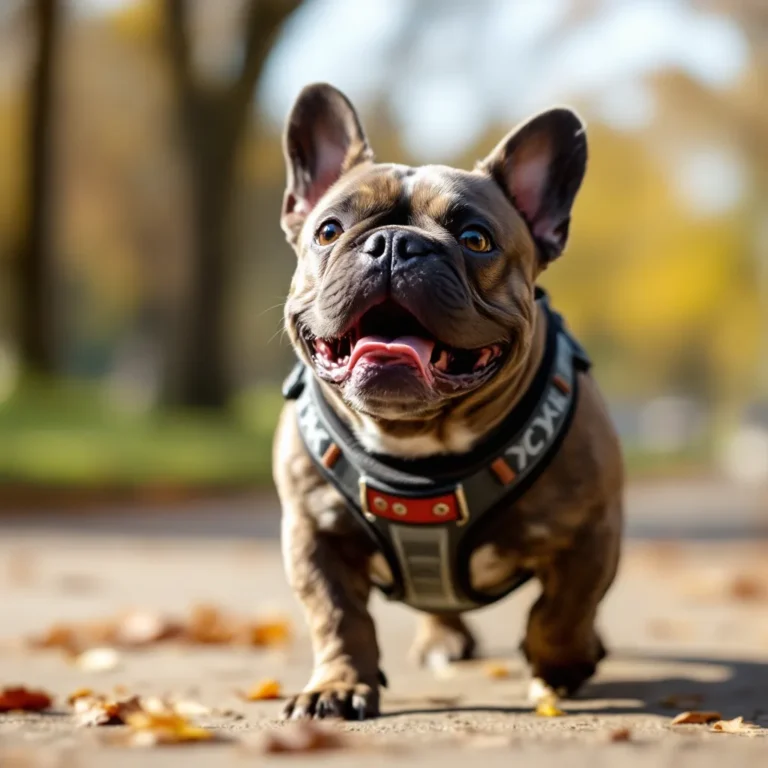
French Bulldogs are brachycephalic dogs, meaning their shortened facial structure can make temperature management and efficient breathing harder than it is for many longer-muzzled breeds. Water is essential for circulation, digestion, tissue function, and heat regulation, but in Frenchies it also plays a practical role in how well they cope with normal daily stressors such as summer walks, indoor overheating, car rides, and rough play.
Hydration is not a cure-all. A well-hydrated French Bulldog can still overheat, especially in humid weather or after overexertion. But a poorly hydrated Frenchie has even less margin for safety. That is why hydration planning should sit alongside your heat-safety routine, not behind it. If overheating is a concern in your climate, read our French Bulldog overheating playbook for prevention and emergency warning signs.
Best ways to keep a Frenchie hydrated at home
- Refresh water frequently. Many dogs drink better when the bowl is cool, clean, and free of food slime or dust.
- Use more than one water station. Put bowls in the main living area and sleeping area, especially in multi-level homes.
- Choose a bowl your dog likes. Some Frenchies prefer wide, shallow bowls that are easier on the face.
- Monitor intake during weather swings. Heat waves, dry winter air, and heavy air conditioning can all change drinking habits.
- Build water breaks into the day. Offer water after walks, play sessions, crate time, and car rides.
- Use food strategically. Wet food or adding water to meals can help some dogs increase total fluid intake.
If your home setup needs a safety review beyond water access alone, our guide to creating a safe environment for a French Bulldog can help you reduce common indoor risks.
Wet food vs. dry food: how diet changes hydration
| Feeding style | Hydration effect | Best use case | Watch-outs |
|---|---|---|---|
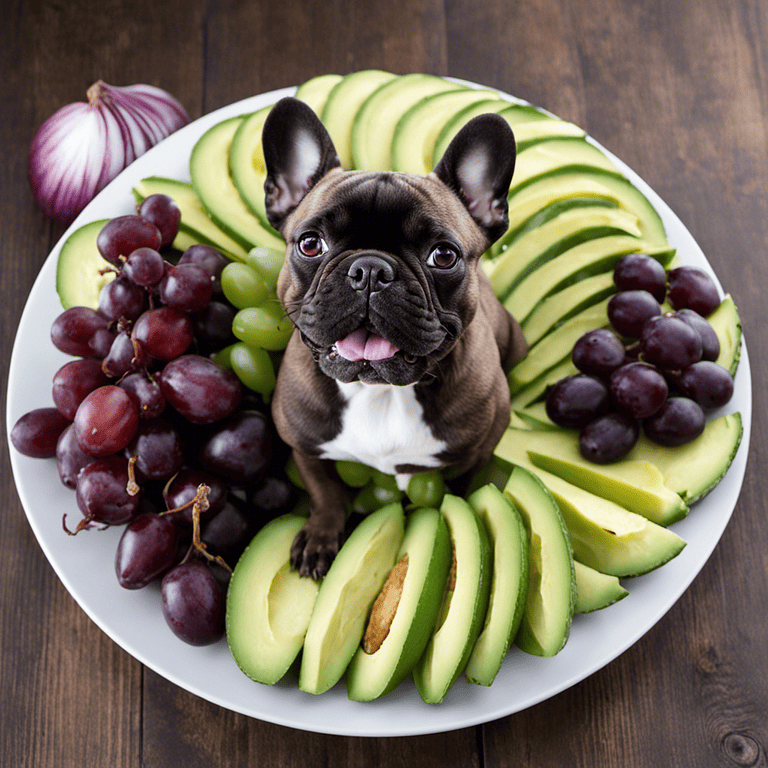
| Mostly dry food | Usually leads to more visible bowl drinking | Dogs doing well on kibble with normal intake | Owners may underestimate water needs if bowls are not refilled and monitored |
| Mostly wet food | Adds significant moisture through meals | Dogs who need easier chewing, appetite support, or extra moisture | Less bowl drinking does not always mean less total hydration |
| Mixed feeding | Can support hydration while keeping routine flexible | Owners wanting a balanced middle ground | Need to monitor calories and digestion when changing foods |
| Water added to meals | Easy way to increase fluid intake | Dogs who are mildly reluctant drinkers but otherwise well | Do not use this to mask serious illness or prolonged refusal to drink |
Diet-related hydration changes should be read together with stool quality, appetite, and weight trends. If your Frenchie has a sensitive stomach, see our French Bulldog digestive health guide before making major food changes.
Signs of dehydration in French Bulldogs
Early dehydration can be subtle. A French Bulldog may simply seem tired, less interested in play, or slower to recover after a walk. As dehydration becomes more serious, you may notice tacky or dry gums, sunken-looking eyes, heavier panting, weakness, concentrated urine, or a clear drop in normal urination frequency. Some dogs also become restless, clingy, or unusually quiet.
Owners sometimes read dehydration as “just heat,” “just a stomach bug,” or “just a low-energy day.” That is risky in Frenchies because these problems often overlap. A dog who is panting, reluctant to drink, and acting off may be dealing with heat stress, gastrointestinal illness, pain, or another medical issue that cannot be safely sorted out by guesswork alone.
Home checks such as gum moisture and general alertness can be useful, but they are screening clues—not replacements for veterinary assessment. Skin-tent tests are often less reliable in dogs than owners assume, especially when body condition, age, or coat type varies.
Hydration and overheating: the connection owners need to understand

Hydration supports normal body function, but it does not make a French Bulldog heat-proof. Brachycephalic breeds are already at greater risk of heat stress because airway limitations can make cooling harder. A Frenchie can have access to plenty of water and still become dangerously overheated after too much exertion, time in a hot car, poor ventilation, or warm, humid outdoor conditions.
Think of hydration as one layer of protection. The full safety plan also includes short walks during cooler hours, avoidance of midday heat, shade, air movement, climate-controlled travel, close supervision, and immediate action if your dog shows distress. If your dog loves water play, read can French Bulldogs swim and should they? because swimming is not an automatic cooling solution for this breed.
Travel, exercise, and warm-weather hydration strategy
Travel and exercise are two of the easiest times to fall behind on hydration. French Bulldogs may be distracted, excited, anxious, or panting enough that they do not settle into a normal drinking rhythm. Long car rides, outdoor events, hotel stays, airport stress, and summer patios are all situations where owners should actively plan water access instead of assuming the dog will self-regulate perfectly.
Before activity or travel
- Start with a well-rested dog who has already had normal access to water
- Pack more water than you think you will need
- Bring a familiar bowl or travel bottle your dog already accepts
- Avoid intense activity in heat or humidity
During activity or travel
- Offer small, regular drink opportunities rather than waiting until your dog looks thirsty
- Use shaded stops and cool indoor breaks
- Watch breathing effort, not just enthusiasm
- Stop immediately if your Frenchie seems sluggish, distressed, glassy-eyed, or unusually panty
After activity or travel
- Let your dog cool down calmly before resuming normal routine
- Monitor appetite, urination, energy, and stool quality for the rest of the day
- Do not assume recovery is complete just because your Frenchie looks happier after resting
New owners should also review our French Bulldog puppy care guide if they are managing hydration in a young dog, since puppies have less reserve and can decline faster.
Vomiting, diarrhea, and why hydration can become urgent fast
Vomiting and diarrhea can push a French Bulldog toward dehydration much faster than a normal day of slightly low water intake. That is especially true in puppies, smaller adults, seniors, and dogs who are also refusing food or acting weak. Even one rough gastrointestinal episode may not be trivial if your dog already seems lethargic, overheated, or unwilling to drink.
Do not force large amounts of water quickly, especially after repeated vomiting. In some cases, offering too much too fast can trigger more vomiting. Instead, contact your veterinarian for guidance when symptoms persist, your dog cannot keep water down, or you see red flags such as blood, severe lethargy, abdominal pain, or worsening weakness. If digestive issues recur, our digestive health guide covers common triggers and supportive care questions.
When to call the vet about hydration concerns
Call your veterinarian promptly if your French Bulldog:
- Refuses water for several hours and seems unwell
- Cannot keep water down
- Has vomiting or diarrhea that is repeated, severe, or paired with lethargy
- Seems weak, disoriented, shaky, or unusually sleepy
- Has dry or tacky gums plus reduced urination
- Is a puppy, senior, or dog with another medical condition and is drinking abnormally
- May be overheating or having trouble breathing
Seek emergency care faster if there are breathing issues, collapse, persistent retching, blue or pale gums, suspected heatstroke, or any rapid decline. Hydration problems are often symptoms of a bigger issue, not the whole issue.
Comparison table: monitor at home, call your vet, or go now?
| Situation | Best next step | Why |
|---|---|---|
| Your Frenchie is acting normal and drinking a bit less on a cool, quiet day | Monitor closely at home | Mild variation can be normal if energy, gums, appetite, and urination stay normal |
| Your dog drank less today but ate, urinated, and behaved normally | Increase observation and offer water more often | Pattern matters more than one isolated lower-intake period |
| Your dog has mild stomach upset but is still bright and taking small amounts of water | Call your vet for advice the same day | Frenchies can dehydrate faster when GI signs start |
| Your dog is lethargic, panting hard, has tacky gums, or is vomiting repeatedly | Urgent veterinary assessment | These are not routine hydration fluctuations |
| Your dog may be overheating, collapsing, or struggling to breathe | Emergency care now | Heat illness and airway compromise can become life-threatening quickly |
Common mistakes
- Assuming “he will drink if he needs it.” Some dogs do; some do not, especially when stressed, excited, or overheated.
- Using water alone as heat protection. A water bowl does not cancel out brachycephalic heat risk.
- Ignoring food moisture. Dogs on wet food may look like they drink less, but that does not automatically mean a problem.
- Waiting too long during diarrhea or vomiting. GI fluid loss can become more serious quickly.
- Not knowing the dog’s baseline. You cannot spot a meaningful change if you have never noticed what normal looks like.
- Offering intense exercise in warm weather. Hydration helps, but it does not make unsafe activity safe.
FAQ
How do I know if my French Bulldog is drinking enough?
Look at the whole picture: normal energy, moist gums, regular urination, stable appetite, and no heat-stress or GI symptoms. Exact ounces matter less than whether your dog is staying consistent and acting normally.
Do French Bulldogs need more water in summer?
Usually yes. Hotter weather, heavier panting, more outdoor exposure, and more cooling demand often increase water needs. But higher intake does not mean heat risk is solved.
Does wet food help with hydration?
Yes. Wet food can meaningfully increase total moisture intake. That may reduce how much your dog drinks from the bowl, so lower visible drinking is not always a warning sign by itself.
Should I worry if my Frenchie drinks less on travel days?
Yes, at least enough to pay attention. Travel stress, excitement, temperature changes, and unfamiliar bowls can reduce drinking. Offer water proactively and monitor closely.
Can I add water to kibble?
Often yes, if your dog tolerates it well and the food is served safely and promptly. It can be a simple way to increase fluid intake, especially for reluctant drinkers.
When is dehydration an emergency?
It becomes urgent when your dog is weak, disoriented, repeatedly vomiting, having significant diarrhea, showing dry or tacky gums with reduced urination, overheating, or having trouble breathing.
Sources
- Merck Veterinary Manual — pet hydration, dehydration, and fluid-balance fundamentals
- American Kennel Club — practical dog hydration and heat-safety guidance
- VCA Animal Hospitals — dehydration signs, GI fluid loss, and when veterinary care is needed
- WSAVA-aligned small animal care principles for monitoring hydration, nutrition, and illness escalation
Editorial note: This article is educational and not a substitute for diagnosis or treatment. Veterinary advice matters most when your French Bulldog is sick, distressed, or not acting normally.
Related next reads
Author and reviewer
Author: FrenchyFab Editorial Team
Medical and breed-safety review: Reviewed for accuracy, risk language, and owner practicality using current general veterinary guidance for hydration, heat safety, and gastrointestinal fluid loss. This content is written for education and should be updated if site veterinary reviewers add practice-specific recommendations.
Last reviewed: 2026

Frenchy Fab editorial profile focused on practical French Bulldog owner guidance, safety-aware care routines, nutrition, puppy care, grooming, training, and transparent product-review methodology. Content is educational and does not replace veterinary diagnosis or treatment.