
Quick answer: A French Bulldog tail pocket is a hidden fold or recessed area under the tail where moisture, debris, and skin irritation can collect. Not every Frenchie has one. If your dog does have a tail pocket, the safest routine is gentle inspection, careful cleaning with vet-approved products, complete drying, weight and skin-fold management, and fast veterinary help for odor, pain, swelling, discharge, bleeding, or repeated infections.
This article replaces sensational tail-pocket content with conservative, owner-safe guidance. Tail pocket problems are common enough that French Bulldog owners should know how to check the area, but the topic can become risky when articles recommend prescription drugs, unverified statistics, or aggressive home remedies. Use this guide to understand the anatomy, build a safe routine, recognize red flags, and know what questions to ask your veterinarian.
Tail Pocket Red Flags
- Strong odor that returns quickly after cleaning.
- Redness, swelling, heat, bleeding, or discharge.
- Pain, yelping, snapping, or sudden resistance to touch.
- Repeated scooting, licking, chewing, or tail-base rubbing.
- Open sores, crusting, pus, or wet skin that does not dry.
- Fever, lethargy, poor appetite, or spreading skin irritation.
If any of these signs appear, book a veterinary appointment. Do not pack the fold with creams, powders, oils, or medications unless your veterinarian instructs you.
What Is a French Bulldog Tail Pocket?
A tail pocket is a fold, crease, or recessed space under or around the tail. French Bulldogs can have short, tight, screw-shaped, or tucked tails, and the surrounding skin may create a small hidden area where moisture and debris collect. Some tail pockets are shallow and easy to keep dry. Others are deep, tight, or difficult to inspect. The deeper and more enclosed the fold is, the easier it is for moisture and friction to become a problem.
Not every French Bulldog has a tail pocket. Owners sometimes clean the area aggressively because they assume every Frenchie must have one. That can irritate normal skin. The goal is not to dig or scrub. The goal is to identify whether there is a hidden fold, keep it clean if present, and involve a veterinarian when the skin looks inflamed or painful.
Tail pocket care connects to several other Frenchie topics: weight management, skin-fold hygiene, allergies, stool quality, grooming, bedding cleanliness, and mobility. A Frenchie with loose stool, itchy skin, extra weight, or difficulty being handled may be more likely to develop irritation around the rear because the area is harder to keep clean and dry.
How to Tell If Your Frenchie Has a Tail Pocket
Choose a calm moment when your dog is relaxed. Wash your hands. Stand beside your dog rather than looming behind them. Gently lift or move the tail area only as much as your dog allows. Look for a crease beneath the tail. You may feel a fold where a fingertip could rest, but do not push deeply. If your dog tenses, turns suddenly, cries, sits down, or tries to bite, stop. Pain or fear around the tail base is a reason to ask for veterinary help.
Use a flashlight if needed. Healthy skin should not smell strongly, ooze, bleed, or look raw. A small amount of normal debris may appear in some folds, but it should wipe away easily and the skin should dry. If the area is wet, greasy, red, swollen, or smelly, do not assume it is a simple cleaning issue. It may involve yeast, bacteria, allergy, anatomy, anal gland discomfort, stool contamination, parasites, or another problem.
Normal Tail Pocket vs Concerning Signs
| Finding | Likely meaning | Best next step |
|---|---|---|
| No fold, no odor, no redness | Likely no meaningful tail pocket issue | Check during normal grooming only. |
| Small dry fold with light debris | Routine hygiene may be enough | Gently clean and dry as needed. |
| Odor, moisture, or greasy film | Irritation, yeast, bacteria, or trapped debris possible | Schedule a vet check if persistent or recurring. |
| Redness, swelling, discharge, blood, pain | Possible infection or injury | Veterinary appointment promptly. |
| Abscess, fever, lethargy, severe pain | Potential urgent condition | Seek urgent veterinary care. |
How to Clean a French Bulldog Tail Pocket Safely
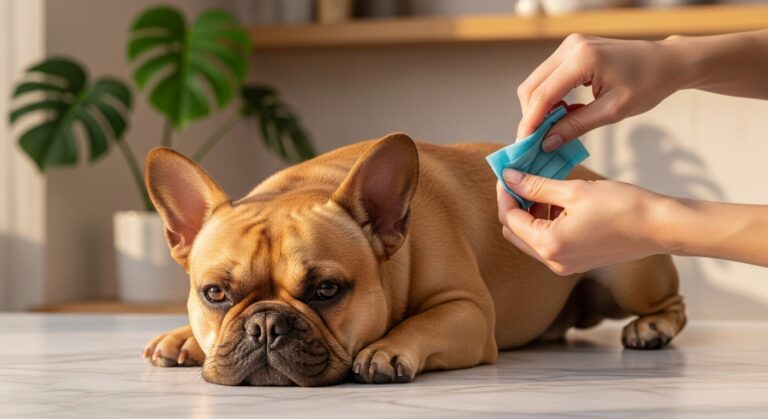
For routine cleaning, keep the process simple. Use a soft gauze pad or dog-safe wipe approved by your veterinarian. Lift the tail area gently. Wipe only the accessible fold. Do not scrape, dig, or force anything deep into the pocket. If the wipe comes out dirty, use a fresh one and repeat gently. The most important step is drying. Moisture left behind can make irritation worse. Pat the area dry with clean gauze or a soft cloth until the skin is no longer damp.
Reward your dog after each calm step. Tail-pocket care should feel predictable and safe, not like a surprise procedure. If your Frenchie is anxious, split the routine into tiny sessions: touch the hip, reward; lift the tail slightly, reward; inspect for one second, reward; wipe once, reward. This handling plan reduces stress and makes future grooming easier.
Cleaning frequency depends on the dog. A shallow dry fold may need only occasional attention. A deeper fold may need more consistent cleaning. Dogs with active infection, allergy, or recurring irritation need a veterinarian’s plan. Do not simply clean more and more aggressively. Over-cleaning can damage the skin barrier and worsen the problem.
What Not to Use in a Tail Pocket
Avoid essential oils, vinegar, hydrogen peroxide, alcohol, harsh antiseptics, fragranced baby wipes, human medicated creams, powders, and leftover prescription products. The tail pocket is sensitive skin, and some products that seem natural or strong can burn, irritate, trap moisture, or interfere with proper diagnosis. Do not use antibiotics, antifungals, steroid creams, or prescription wipes unless your veterinarian has recommended them for this specific dog and current problem.
Also avoid inserting cotton swabs deep into the fold. A cotton swab can push debris farther in, irritate the skin, or break apart. If the pocket is too deep to clean without digging, that is a veterinary management issue, not a reason to become more forceful at home.
Why Tail Pocket Problems Come Back
Recurring tail pocket problems usually have more than one cause. Anatomy may create a tight fold. Extra weight may deepen the crease. Allergies may inflame the skin. Loose stool may contaminate the area. Infrequent drying may leave moisture behind. A dog that resists handling may make cleaning inconsistent. Bedding, heat, humidity, and overall grooming habits can also contribute.
That is why the best prevention plan is not one magic wipe. It is a routine. Keep stools consistent through diet and veterinary care. Manage weight. Keep the fold dry. Wash bedding regularly. Build cooperative handling. Treat allergies or infections with veterinary guidance. Track flare-ups so you can see whether they follow diarrhea, hot weather, swimming, new food, or missed grooming.
When to Call a Vet
Call your veterinarian if odor persists, the skin is red or swollen, your dog seems painful, discharge is present, the area bleeds, sores appear, or the problem keeps returning. A vet may examine the fold, check for infection, discuss allergy or skin disease, evaluate anatomy, and recommend appropriate cleaning products or medications. In some severe recurring cases, surgery may be discussed, but that decision belongs with a veterinarian after examining the dog.
Seek urgent help if your Frenchie is lethargic, feverish, very painful, has spreading swelling, an abscess, open wounds, or a sudden severe change. Rear-end discomfort can also overlap with anal gland issues, parasites, back pain, or orthopedic problems, so do not assume every scoot is a tail pocket infection.
Prevention Routine
- Inspect the tail area during weekly grooming.
- Clean only when needed or as your vet recommends.
- Dry fully after wiping, bathing, rain, or swimming.
- Keep bedding clean and dry.
- Monitor stool quality and address diarrhea quickly.
- Maintain healthy body condition.
- Reward calm handling so the routine stays low-stress.
- Use your veterinarian’s product recommendations for dogs with recurring issues.
Internal Links to Add in WordPress
Link this guide to FrenchyFab articles on grooming, skin folds, ear infections, allergies, digestive problems, weight management, and nutrition. Strong anchor examples include “French Bulldog grooming routine,” “French Bulldog skin folds,” “French Bulldog allergies,” “French Bulldog diarrhea,” and “overweight French Bulldog.”
Helpful Sources
- Merck Veterinary Manual: Skin Disorders of Dogs
- Cornell Canine Health Center: Skin Fold Dermatitis
- VCA Hospitals: Pyoderma in Dogs
Cooperative Care: Teaching Your Frenchie to Accept Tail Checks
Tail-pocket care becomes much easier when the dog has been trained to participate. Many French Bulldogs dislike rear handling because the area is sensitive, the owner approaches from behind, or past cleaning sessions were uncomfortable. Cooperative care changes the emotional pattern. The dog learns that handling predicts rewards, that sessions are short, and that the owner stops before panic.
Start away from the tail. Touch the hip for one second, mark with “yes,” and reward. Repeat until your dog stays relaxed. Then touch closer to the tail base. Reward. Later, lift the tail area slightly and reward. Do not clean yet. The first goal is trust. Once your dog accepts brief handling, add a dry gauze touch, then a single wipe, then a dry pat. Each step should be easy enough that your Frenchie can succeed without twisting, sitting, or snapping.
A consent cue can help. For example, teach your dog to rest their chin on a towel or stand on a mat. When the dog leaves the position, pause. This does not mean the dog controls emergency care, but it gives them a predictable way to participate in routine grooming. Cooperative care is especially useful for dogs that need frequent fold checks, ear cleaning, nail trims, or medication.
Tail Pocket Cleaning Routine: Step-by-Step
- Prepare first: clean gauze, vet-approved wipe or cleanser, dry cloth, small rewards, and good lighting.
- Choose the right time: after a potty break and when your dog is calm, not during zoomies or after a hot walk.
- Position safely: stand beside your dog or have them on a non-slip surface. Do not force them into a painful posture.
- Inspect briefly: look for odor, redness, discharge, swelling, moisture, or debris.
- Wipe gently: clean only the accessible fold. Use a fresh section of gauze for each pass.
- Dry completely: pat until the area is dry. Drying is as important as cleaning.
- Reward and record: give a small reward and note any change in smell, color, or sensitivity.
If you cannot clean without digging, if the fold closes tightly around the skin, or if the area is painful, stop. A difficult pocket needs veterinary guidance, not more pressure from the owner.
Tail Pocket Problems vs Anal Gland Problems
Owners often confuse tail-pocket irritation with anal gland discomfort because both can cause scooting, licking, or rear-end attention. Anal gland problems may involve fishy odor, scooting, sudden licking near the anus, swelling near the rectum, or discomfort when sitting. Tail-pocket problems are usually centered in the fold under or around the tail and may include trapped debris, moisture, redness, or odor inside the skin crease. A dog can also have both at once.
This distinction matters because the treatment path is different. Tail-pocket care focuses on fold hygiene, skin health, drying, and anatomy. Anal gland issues require veterinary evaluation and sometimes expression or treatment. Do not squeeze anal glands at home unless trained by a professional; improper technique can injure the dog or worsen inflammation.
How Diet and Stool Quality Affect Tail Pocket Care
Loose stool, frequent stool, and messy stool can contaminate the tail area and make skin-fold irritation more likely. If your Frenchie’s tail pocket flares after diarrhea, the root issue may not be the cleaning schedule. It may be food transition speed, treats, parasites, infection, stress, or another digestive problem. Track stool quality alongside tail-pocket symptoms.
A stable, complete-and-balanced diet, measured treats, and slow transitions can reduce digestive chaos. If your dog has repeated loose stool, itchy skin, ear infections, and tail-pocket irritation, ask your veterinarian whether allergies, infection, or another skin condition is involved. Do not assume one wipe can solve a whole-body pattern.
Owner Log for Recurring Tail Pocket Flare-Ups
| Date | Finding | Possible trigger | Action taken | Vet follow-up? |
|---|---|---|---|---|
| Example | Mild odor, no redness | Rain walk yesterday | Cleaned and dried | No, monitor |
| Example | Red, painful, discharge | Unknown | Stopped cleaning | Yes, book visit |
Use the log to identify patterns. Flares after hot weather, diarrhea, missed drying, swimming, or food changes give your vet better clues than a general statement that the pocket “keeps coming back.”
Bathing, Rain, Swimming, and Tail Pocket Moisture
Moisture is one of the most important practical details in tail-pocket care. A fold that is clean but damp can still become irritated. After baths, rainy walks, swimming, or wiping, make drying part of the routine. Use a clean, soft towel or gauze and pat rather than rub. If your dog has a very deep fold, ask your veterinarian how to dry it safely without scraping the skin.
Swimming deserves extra caution. Many French Bulldogs are poor swimmers because of their body shape, and water trapped in skin folds can add another problem after the swim ends. If your Frenchie is around water, use close supervision, consider a properly fitted life jacket, rinse if needed, and dry all folds afterward. Watch the tail pocket, face folds, armpits, paws, and ears.
How Grooming, Allergies, and Tail Pockets Connect
Tail-pocket irritation rarely exists in isolation when a dog has broader skin issues. A French Bulldog with itchy paws, recurrent ear infections, belly redness, face-fold irritation, or hot spots may have allergies or skin barrier problems that make the tail area more vulnerable. In that case, cleaning the tail pocket helps only part of the problem. The larger goal is a veterinary skin plan that addresses itch, infection, allergy triggers, and fold hygiene together.
This is also why repeated tail-pocket odor should not be covered with fragrance. Odor is information. It tells you something in the fold may be moist, inflamed, infected, or contaminated. Deodorizing without identifying the cause can delay care and make the skin worse.
How to Write a Vet-Ready Tail Pocket Note
Before the appointment, write a concise note: “My French Bulldog has had tail-pocket odor for two weeks. It improves for one day after cleaning but returns. The area is red on the left side, and he turns when touched. Stool has been soft three times this week. We changed treats ten days ago.” This kind of note is far more useful than “his butt smells.” It gives timing, recurrence, location, behavior, stool quality, and a possible trigger.
Bring photos if the area changes day to day. Do not use filters or dramatic lighting. A simple clear photo in natural light can help show redness, swelling, or discharge. If your dog is painful, do not force photos. Safety comes first.
Frequently Asked Questions
What is a French Bulldog tail pocket?
A tail pocket is a fold or recessed area under or around the tail where moisture, debris, and irritation can collect. Not every French Bulldog has one.
How do I know if my Frenchie has a tail pocket?
Gently lift the tail area and look or feel for a hidden fold beneath the tail. If your dog is painful, swollen, bleeding, or reactive, stop and call your vet.
How often should I clean a French Bulldog tail pocket?
Frequency depends on depth, skin condition, moisture, and your vet’s advice. Some dogs need routine cleaning, while others only need occasional checks.
Can I use baby wipes on a tail pocket?
Use products your veterinarian approves for dog skin. Avoid fragranced wipes, alcohol, peroxide, essential oils, or harsh products in sensitive folds.
What are signs of a tail pocket infection?
Concerning signs include foul odor, redness, swelling, discharge, blood, pain, scooting, chewing at the rear, or the dog resisting touch.
Can I treat a tail pocket infection at home?
You can keep the area clean and dry for mild debris, but suspected infection, pain, discharge, swelling, or bleeding needs veterinary evaluation.
What should I not put in a tail pocket?
Avoid human antiseptics, essential oils, vinegar, peroxide, powders, creams, or medications unless your veterinarian specifically recommends them.
Why does my French Bulldog tail pocket smell?
Odor usually means trapped moisture, debris, yeast, bacteria, or inflammation. Persistent odor should be checked by a vet.
Can weight make tail pocket problems worse?
Extra body fat can deepen folds and make drying harder, so weight management may support skin-fold comfort.
When is tail pocket surgery considered?
Only a veterinarian can advise on surgery. It may be discussed in severe, recurring, painful, or anatomically difficult cases that do not respond to medical management.

Frenchy Fab editorial profile focused on practical French Bulldog owner guidance, safety-aware care routines, nutrition, puppy care, grooming, training, and transparent product-review methodology. Content is educational and does not replace veterinary diagnosis or treatment.