
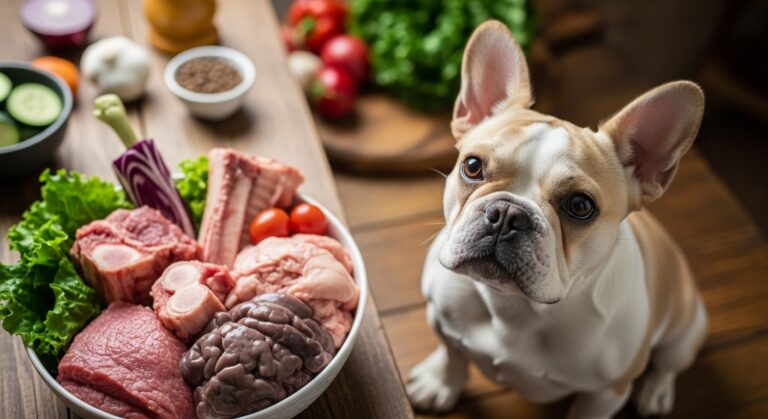
Raw feeding is one of the most emotional nutrition topics for French Bulldog owners. Some people present it as a cure for itching, gas, coat problems, or picky eating. A safer guide has to slow that conversation down. Raw diets can expose dogs and people to pathogens, bones, nutrient imbalance, and household contamination. This article explains the risks clearly and gives a safer decision path.
Quick answer
A raw food diet is not a casual upgrade for most French Bulldogs. Raw meat, eggs, bones, and unpasteurized animal products can carry bacteria and create household risks, especially around children, older adults, pregnant people, and immunocompromised people. If you are considering raw feeding, talk to your veterinarian first and compare safer complete-and-balanced cooked, commercial, or therapeutic options.
When to call a veterinarian first
Call your veterinarian before experimenting if your French Bulldog has repeated vomiting, diarrhea, blood in stool, appetite loss, poor growth, sudden weight change, severe itching, ear pain, breathing difficulty, blue or pale gums, collapse, heat distress, eye injury, obvious pain, seizures, or extreme lethargy. A short-muzzled dog can deteriorate quickly, so the safest plan is to treat breathing trouble, heat stress, collapse, and severe gastrointestinal signs as urgent.
What this guide helps you do
- Get a direct answer without exaggerated promises.
- Separate everyday owner decisions from veterinary warning signs.
- Use practical tables, routines, and examples that are easy to apply.
- Choose products only when they support safety, fit, hygiene, training, or monitoring.
Key topics covered
raw food dietFrench Bulldog raw feedingSalmonellaListeriaCampylobacterpathogen riskraw bonesnutrient imbalancecomplete and balancedCDC pet food safetyAVMA raw diet policyfood handlingbrachycephalic dogsveterinary nutritionist
Why raw feeding deserves a conservative answer
French Bulldogs already require extra caution around heat, breathing, weight, skin, and digestion. Adding raw feeding increases the number of variables an owner must control. A raw diet can look natural and still be unsafe if it is contaminated, unbalanced, too high in fat, too high or low in minerals, or built around bones that can fracture teeth or obstruct the gastrointestinal tract.
The strongest raw-diet pages online often promise better coats, cleaner teeth, smaller stools, and allergy relief. Those claims can be tempting, but they are not a substitute for safety data, label adequacy, or veterinary diagnosis. If a Frenchie is itchy, gassy, or has recurrent ear issues, the dog needs an organized evaluation. Raw food should not be used as a shortcut around diagnostics.
The household risk matters as much as the dog risk. Raw pet food is handled in kitchens, thawed in refrigerators, served in bowls, tracked around floors, and potentially licked onto people. Even apparently healthy pets can shed pathogens. Families with vulnerable people should be especially cautious.
The main raw feeding risks for Frenchies
Contamination is the risk owners understand first. Raw or undercooked animal-source proteins can contain bacteria that make pets or people sick. The risk does not disappear because the product is premium, frozen, boutique, or marketed for pets. Freezing can reduce some parasites in certain contexts, but it does not make raw meat sterile.
Bones are another major concern. Raw meaty bones are often promoted for dental health, but they can break teeth, injure the mouth, cause constipation, obstruct the gut, or create choking concerns. French Bulldogs have broad heads, strong jaws, and short muzzles; that anatomy does not make bone chewing risk-free.
Nutrient imbalance can be less obvious. Calcium, phosphorus, iodine, copper, zinc, vitamin D, vitamin E, fatty acids, and calories all matter. A raw bowl can look rich and still be inappropriate. Puppies are at higher risk because growth errors can have long-term consequences.
Who should avoid raw feeding
Raw diets are a poor fit for households with infants, young children, older adults, pregnant people, or immunocompromised people. They are also risky for dogs with significant gastrointestinal disease, pancreatitis risk, immune compromise, kidney disease, serious chronic illness, poor dental condition, or a history of swallowing objects.
Puppies should not be used as raw-diet experiments. Growth nutrition requires precision. If you want to feed a homemade diet to a puppy, work with a veterinarian or board-certified veterinary nutritionist. “Balanced over time” is not a safe excuse for inconsistent growth nutrition.
French Bulldogs with breathing difficulty, heat intolerance, repeated vomiting, chronic diarrhea, poor appetite, or unexplained weight loss need diagnosis before diet experimentation. Raw feeding can distract from the real problem and complicate the clinical picture.
Safer alternatives that still address owner goals
If the goal is better ingredient control, consider a cooked homemade diet formulated by a veterinary nutritionist. If the goal is digestibility, ask about gastrointestinal diets, sensitive-stomach formulas, or therapeutic diets when indicated. If the goal is allergy evaluation, ask about a strict elimination diet rather than rotating raw proteins.
If the goal is enrichment, use safer food puzzles, slow feeders, frozen stuffed toys made with vet-approved ingredients, or part of the regular meal. If the goal is dental health, ask your veterinarian about dental exams, brushing, approved dental chews, and professional cleanings rather than relying on bones.
If the goal is a shinier coat, start with the basics: complete nutrition, parasite control, skin-fold care, allergy evaluation, and appropriate omega fatty acid discussions with your veterinarian. Coat quality is often a health signal, not simply a food-brand issue.
If you still want to discuss raw with your veterinarian
Bring the exact product label or recipe, ingredient list, pathogen-control claims, handling instructions, calorie information, and supplement information. Ask whether the diet is complete and balanced for your dog’s life stage, how contamination risk is managed, and what signs would mean stopping immediately.
Ask who should not handle the food in your home. Ask whether the dog’s medical history makes raw feeding a bad fit. Ask how to protect counters, bowls, floors, children, and other pets. Also ask what safer alternatives can meet the same goals.
A responsible raw-feeding discussion does not start with “how do I transition in 14 days?” It starts with “is this appropriate for this dog and this household?”
The safer decision path before trying raw
Before trying raw food, define the exact problem you are trying to solve. “I want my dog healthier” is too vague. Is the issue itching, soft stool, weight, bad breath, picky eating, ear infections, or coat quality? Each problem has different causes and different safer first steps. Without a clear problem, raw feeding becomes a belief system rather than a care decision.
Next, compare lower-risk options. For itching, ask about infection, fleas, environmental allergy, and controlled diet trials. For stool issues, ask about parasites, rapid food changes, fat content, gastrointestinal disease, or a digestible veterinary diet. For dental concerns, ask about tooth brushing and professional dental care. For ingredient control, ask about cooked formulated diets. Raw feeding should not be the first or only tool considered.
If a veterinarian still agrees to discuss raw feeding, bring product labels, sourcing claims, pathogen-control claims, guaranteed analysis, calorie information, and handling instructions. Ask what would make the diet inappropriate for your dog and your household. A responsible answer may still be no, especially if your household includes vulnerable people or your dog has health risks.
- Name the problem before changing the diet.
- Rule out medical causes before assuming food is the fix.
- Compare cooked and commercial options before raw animal products.
- Ask who in the home could be at risk from contamination.
- Have a stop plan for vomiting, diarrhea, fever, lethargy, or appetite loss.
Household safety if raw food is already present
If raw pet food is already in the home, hygiene needs to be deliberate. Store it away from ready-to-eat human foods. Thaw it in a contained area. Wash bowls, utensils, counters, and hands after every feeding. Prevent children from touching bowls or food-prep areas. Do not let the dog lick faces after meals, especially around vulnerable family members.
Watch the dog closely. Raw-fed dogs may show vomiting, diarrhea, fever, lethargy, appetite loss, or no signs at all while still creating household contamination risk. Do not assume that a dog looking normal means the food is risk-free. If illness appears, contact your veterinarian and mention the raw diet clearly.
Also monitor nutrition over time. Weight change, constipation, fractured teeth, painful chewing, dull coat, poor growth, and repeated digestive problems are all reasons to reassess. The owner should not feel locked into raw feeding because a social media group says detox symptoms are normal.
How to talk with a raw-feeding advocate without losing the safety focus
Raw-feeding discussions often become personal because owners want to feel they are doing the most natural thing for their dog. Keep the conversation centered on risk, evidence, and the individual French Bulldog. You do not need to argue that every raw-fed dog becomes sick. You only need to recognize that raw animal products add avoidable pathogen and handling risks, and that French Bulldogs with digestive, dental, airway, or immune concerns may have less margin for experimentation.
If someone reports that raw food fixed their dog, treat it as one anecdote, not as a universal protocol. The dog may have improved because the old diet was too rich, because treats were removed, because calories changed, because infection was treated at the same time, or because the owner started monitoring more closely. Improvement after a change does not automatically prove the change was the only cause.
A safer owner question is: what is the least risky way to achieve the same goal? If the goal is fewer ingredients, try a controlled commercial limited-ingredient or veterinary diet. If the goal is home-prepared food, discuss a cooked formulated recipe. If the goal is dental care, discuss brushing and dental exams. If the goal is enrichment, use safe food puzzles.
- Separate anecdote from evidence.
- Ask whether the same goal can be met with a cooked or commercial option.
- Consider the humans in the household, not only the dog.
- Reject detox explanations for serious vomiting, diarrhea, or lethargy.
- Keep emergency and contamination risks visible.
Common reader situations and the safest next step
My dog did better after eating raw once
A short-term improvement does not prove raw food is the safest long-term plan. The dog may have eaten fewer treats, fewer calories, a different protein, or a less processed food. Those variables can be tested with lower-risk options too.
Write down what improved and ask your veterinarian how to reach the same goal with a complete cooked, commercial, or therapeutic diet. The goal is the benefit, not loyalty to a risky method.
I am worried about kibble
It is fair to ask questions about any food. Instead of jumping from concern about kibble to raw feeding, evaluate complete-and-balanced status, company transparency, calorie density, tolerance, and veterinary fit. Commercial food is not automatically perfect, but raw is not automatically safer.
If you want more moisture or ingredient control, wet food or cooked formulated diets may meet the goal with less pathogen risk.
My household has kids or vulnerable adults
Raw feeding becomes a household decision, not just a dog decision. Children, older adults, pregnant people, and immunocompromised people can be more vulnerable to foodborne illness. Bowls, floors, saliva, counters, and hands can all become part of the risk path.
In these homes, safer alternatives deserve priority. If raw food is already present, hygiene rules should be strict and the veterinarian should know.
I want raw for dental health
Raw bones are often promoted for teeth, but they can break teeth, injure the mouth, obstruct the gut, or create choking concerns. French Bulldogs are not exempt from those risks.
Ask your veterinarian about brushing, dental exams, professional cleaning, and dental products that are appropriate for your dog’s mouth and chewing style.
Fast decision table
| Owner goal | Safer first question | Why raw is not the only answer |
|---|---|---|
| Itching | Has my vet ruled out infection, parasites, and environmental allergy? | Food is only one possible trigger. |
| Soft stool | Is this diet complete, digestible, and introduced slowly? | Sensitive stomachs may need controlled diets, not raw meat. |
| Dental health | Does my dog need a dental exam or brushing routine? | Bones can injure teeth or the gut. |
| Ingredient control | Would a cooked formulated diet meet the goal? | Cooking reduces pathogen risk compared with raw animal products. |
| Picky eating | Is appetite change medical or behavioral? | Richer raw food can hide an underlying problem. |
Best products to consider
These Amazon product boxes are included only where they support the article’s advice. They use the affiliate tracking ID papalex-20. Always confirm the exact item, size, material, ingredients, seller, and suitability for your dog before buying.
Pet food storage and sanitation supplies
Safe handling matters for every diet. Storage containers and washable bowls help keep feeding areas cleaner.
- Use separate utensils for pet food.
- Wash bowls daily.
- Do not rely on storage tools to make raw food risk-free.
Affiliate disclosure: this link uses Amazon Associates tracking ID papalex-20. The embedded Amazon unit below is designed to render current Amazon product images and listings for this exact shopping intent when scripts are allowed in your browser.
Stainless steel dog bowls
Stainless steel bowls are durable, easy to wash, and useful for owners who want simpler hygiene around feeding.
- Choose the right size for a Frenchie muzzle.
- Wash after meals.
- Replace scratched or damaged bowls.
Affiliate disclosure: this link uses Amazon Associates tracking ID papalex-20. The embedded Amazon unit below is designed to render current Amazon product images and listings for this exact shopping intent when scripts are allowed in your browser.
Food prep gloves and disinfecting supplies
For households handling any meat or high-moisture pet food, basic kitchen hygiene reduces cross-contamination risk.
- Keep pet food away from ready-to-eat human food.
- Clean counters and utensils.
- Wash hands even when gloves are used.
Affiliate disclosure: this link uses Amazon Associates tracking ID papalex-20. The embedded Amazon unit below is designed to render current Amazon product images and listings for this exact shopping intent when scripts are allowed in your browser.
Step-by-step owner plan
- Write down your dog’s age, current weight, ideal-weight goal if known, medical conditions, and current routine.
- Make one change at a time so you can tell what helped or hurt.
- Track symptoms with dates, photos, stool notes, appetite, breathing, skin, ears, and behavior.
- Use veterinary guidance for persistent, severe, or confusing signs rather than repeating internet experiments.
- Update the routine every few weeks based on your dog’s actual response, not on trend language.
Common mistakes to avoid
- Treating breed averages as rules for every individual dog.
- Changing food, gear, supplements, training, and schedule all at once.
- Ignoring heat, breathing, pain, or severe digestive signs because the dog still seems playful.
- Buying products because they look cute rather than because they fit the dog safely.
- Using affiliate recommendations as medical advice.
- Keeping old clickbait claims, fake statistics, or unsupported promises on a page that should build trust.
Frequently asked questions
Is raw food good for French Bulldogs?
Raw food is not automatically good for French Bulldogs. It carries pathogen, bone, and nutrient-balance risks and should be discussed with a veterinarian before use.
Can raw food cure French Bulldog allergies?
No diet should be presented as an allergy cure. Food allergy diagnosis usually requires a controlled veterinary diet trial.
Are raw bones safe for French Bulldogs?
Raw bones can still cause broken teeth, choking, constipation, obstruction, or mouth injury. Ask your vet about safer dental options.
Can freezing raw food kill bacteria?
Freezing does not make raw meat sterile. Food handling and pathogen risks remain important.
What is a safer alternative to raw food?
Depending on the goal, safer options may include complete commercial food, veterinary therapeutic diets, cooked formulated homemade diets, or controlled elimination diets.
Should puppies eat raw diets?
Puppies need precise growth nutrition. Do not feed a raw puppy diet without veterinary nutrition oversight.
Sources and further reading
- AVMA raw diet policy
- CDC pet food safety
- FDA complete and balanced pet food
- WSAVA Global Nutrition Guidelines
Editorial note
This FrenchyFab guide is written for practical owner education. It avoids fake statistics, fake product testing, invented case studies, and medical promises. Use it to organize better questions, safer routines, and smarter product choices, not to replace diagnosis or treatment from your veterinarian.
Last updated: May 31, 2026. Affiliate disclosure: As an Amazon Associate, FrenchyFab may earn from qualifying purchases through links that use tracking ID papalex-20.

Frenchy Fab editorial profile focused on practical French Bulldog owner guidance, safety-aware care routines, nutrition, puppy care, grooming, training, and transparent product-review methodology. Content is educational and does not replace veterinary diagnosis or treatment.